United States Geosynthetics Market

United States Geosynthetics Market Size, Share, Revenue, Upcoming Trends, Growth Opportunities, Future Strategy and Business Challenges 2033: SPER Market Research

The word “geosynthetics” refers to synthetic materials composed of polymers, such as polyethylene, polyester, and polypropylene. To increase the total lifespan and functionality of facilities, geosynthetics are mostly utilised in civil engineering and building projects. Geosynthetics serve a number of functions, including as filtration, strengthening, drainage, and containment. For a variety of geotechnical, environmental, and transportation engineering applications, these materials provide reasonably priced solutions. Geosynthetics are used for foundation reinforcement, separation, and road and pavement stabilisation. Additionally, these materials are utilised in structural drainage, subsurface drainage systems for dewatering, and road foundations. Industrial buildings, parking lots, and new roadways are reinforced using geotextiles. When geosynthetics are employed, sustainable development, little earthwork, a lower carbon footprint, and quicker construction are all necessary.

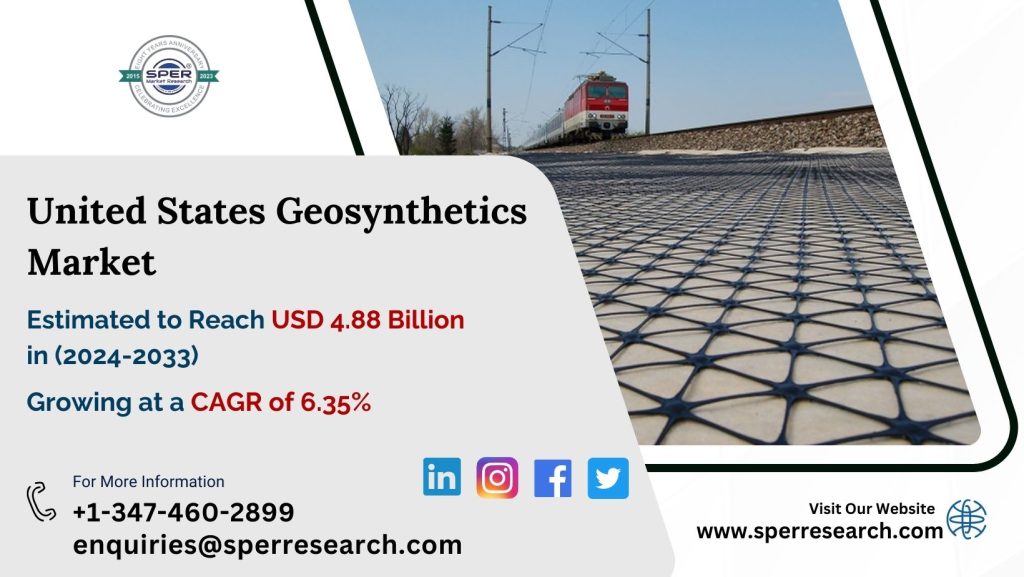
According to SPER Market Research, United States Geosynthetics Market Size- By Product, By Type, By Material, By Application- Regional Outlook, Competitive Strategies and Segment Forecast to 2033’ states that United States Geosynthetics Market is estimated to reach USD 4.88 billion by 2033 with a CAGR of 6.35%.

The expansion of the construction sector will be aided by the government’s growing expenditure on infrastructure projects like roads, railroads, bridges, airports, dams, and others. The biggest contributor to the US economy is the building industry. In a number of building projects, geosynthetic materials are used to improve drainage, regulate evaporation, prevent erosion, and fortify infrastructure. In civil engineering and construction, geosynthetics serve a number of purposes, such as providing filtration behind all hydraulic systems, basal reinforcement to support the soil reinforcement structure, erosion control blanket to protect the slope at the top, and erosion prevention. Temporary roads employ geosynthetics to lessen rutting in the gravel surface and the quantity of gravel needed to sustain traffic.

Request For Free Sample Report @ https://www.sperresearch.com/report-store/usa-geosynthetics-market.aspx?sample=1

Polystyrene polymer is the basic material used to make expanded polystyrene (EPS) geofoam. Because resins are used to create geofoam, a petroleum by-product, the material is susceptible to changes in petroleum prices. Natural fibres like jute and coir as well as synthetic fibres like polypropylene, polyester, and polyethylene are the raw materials utilised to make geotextiles. The prognosis for the sector is probably going to be negatively impacted by changes in the availability and demand for certain raw materials. But crude oil is extracted for synthetic materials. As a result, changes in the price of crude oil or petroleum can have a big impact on the US geosynthetics market and limit the expansion of the sector.

The market’s value chain was impacted by the COVID-19 outbreak, which caused the nation to announce restrictions on supply, distribution, and the movement of raw materials and completed items. Numerous enterprises’ ongoing construction projects were impacted by the lockdown and regulations across the United States, which forced them to halt operations, resulting in the loss of employees and a decrease in revenue output. Because of the economic chaos, most investors are hesitant to fund new construction projects. Crude oil prices fell into negative territory following the COVID-19 pandemic. There was a lack of storage space as a result of the excess crude oil supply brought on by a decline in demand. This has a detrimental impact on plastics prices.

The Southern region dominated the United States geosynthetics market due to rapid infrastructure development. Some of the key players are – GSE Environmental, Texel Technical Materials, SKAPS Industries, Fibertex Nonwoven A/S, Tensar International Corporation.

For More Information, refer to below link:-

US Geosynthetics Market Revenue

Related Reports:

Asia-Pacific Chromatography Resins Market Growth, Size, Trends Analysis- By Origin, By Technology, By End User Industry- Regional Outlook, Competitive Strategies and Segment Forecast to 2033

Europe Metal Cleaning Chemicals Market Growth, Size, Trends Analysis- By Form, By Type, By Functional Additives, By End User Industry- Regional Outlook, Competitive Strategies and Segment Forecast to 2033

Follow Us – 

LinkedIn | Instagram | Facebook | Twitter

Contact Us:

Sara Lopes, Business Consultant – U.S.A.

SPER Market Research

enquiries@sperresearch.com

+1-347-460-2899

United States Geosynthetics Market

US Geosynthetics Market Share, Revenue, Growth Drivers, Rising Trends, CAGR Status, Challenges, Business Opportunities, Future Strategy and Forecast 2033: SPER Market Research

Geosynthetics are polymeric materials mostly composed of polyester, polyethylene (PE), and polypropylene. This category includes geotextiles, geogrids, geonets, and geomembranes. Geosynthetics are significant in a variety of applications, including erosion control, filtration, landfills, drainage, and civil engineering projects. Their cost-effectiveness, durability, and adaptability make them useful in a wide range of industries, including mining, transportation, and agriculture. Aside from their economic and structural benefits, geosynthetics are known for their ability to improve the mechanical and physical qualities of soil, allowing it to withstand harsh weather. As a result, geosynthetics are widely used, contributing to the success of numerous industrial operations and infrastructure projects.

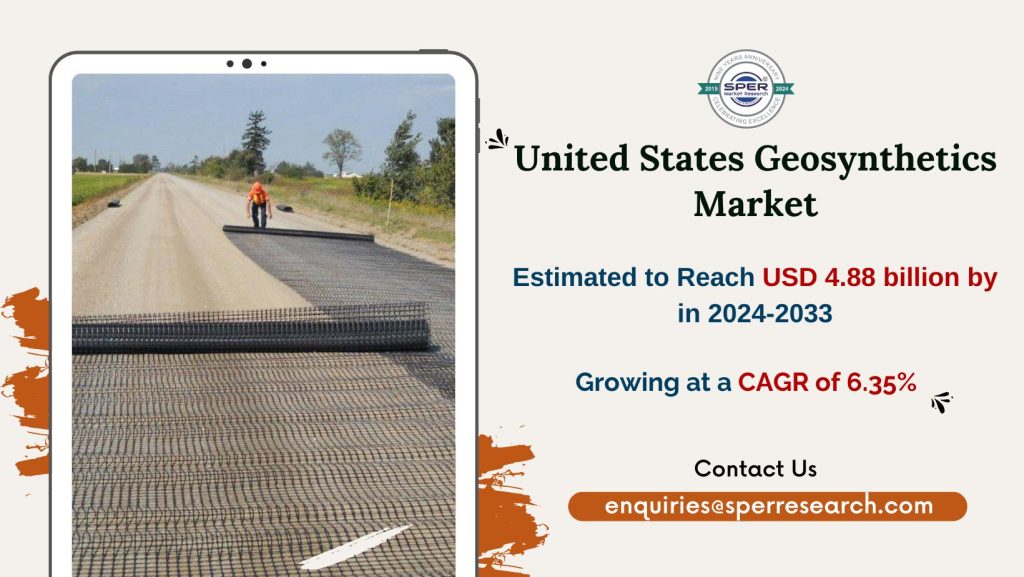
According to SPER market research, United States Geosynthetics Market Size- By Product, By Type, By Material, By Application – Regional Outlook, Competitive Strategies and Segment Forecast to 2033’ state that the United States Geosynthetics Market is predicted to reach 4.88 billion by 2033 with a CAGR of 6.35%.

Drivers: The geosynthetics market in the United States is quickly rising due to the growing use of these polymeric materials in a wide range of sectors. Geotextiles, geogrids, geonets, and geomembranes are widely used in a variety of applications, including erosion control, filtration, landfills, drainage, and civil engineering projects. In the United States, the geosynthetics market is defined by its cheap cost, durability, and adaptability, making these materials vital to industrial activity in sectors including as mining, transportation, and agriculture. Aside from that, the market’s expansion is being driven by increased knowledge of geosynthetics’ capacity to improve soil mechanical and physical qualities, resulting in resistance to harsh weather conditions.

Restraints: Polystyrene polymer is the raw ingredient required for expanded polystyrene (EPS) geofoam production. The substance is subject to petroleum costs since resins are used in the creation of geofoam, a petroleum byproduct. Geotextiles are made of both natural fibers like jute and coir and synthetic fibers like polypropylene, polyester, and polyethylene. Changes in demand and supply for these raw materials are expected to have a detrimental influence on the industry’s prospects. However, synthetic materials are derived from crude oil. Thus, variations in crude oil or petroleum prices can have a significant influence on the US geosynthetics market, posing a barrier to industry growth.

Request For Free Sample Report @ https://www.sperresearch.com/report-store/usa-geosynthetics-market.aspx?sample=1

Impact of COVID-19 on United States Geosynthetics Market

The COVID-19 outbreak had a substantial influence on the US geosynthetics market. Labour shortages, supply chain interruptions, and project delays all wreaked havoc on the construction industry. Nonetheless, the market has demonstrated resilience, driven by the need for post-pandemic economic recovery and the commencement of infrastructural projects. The emphasis on sustainability and environmental considerations has also enabled the use of geosynthetics in infrastructure development projects.

 United States Geosynthetics Market Key Players:

Geographically, the East Coast area holds a substantial portion of the industry because of its dense population and vast infrastructure development. Moreover, SKAPS Industries, GSE Environmental, Texel Technical Materials, Inc, Fibertex Nonwoven A/S, Tensar International Corporation, and other renowned companies are some of the leading companies in the sector.

United States Geosynthetics Market Segmentation:

By Product: Based on the Product, United States Geosynthetics Market is segmented as; Geotextiles, Geomembranes, Geogrids, Geocells, Geonets, Geosynthetic Clay Liner, Pre-Fabricated Vertical Drains, Others.

By Type: Based on the Type, United States Geosynthetics Market is segmented as; Woven, Non-Woven, Knitted, Others.

By Material: Based on the Material, United States Geosynthetics Market is segmented as; Polypropylene, Polyester, Polyethylene, Polyvinyl Chloride, Synthetic Rubber, Others.

By Application: Based on the Application, United States Geosynthetics Market is segmented as; Road Construction and Pavement Repair, Railroads, Drainage Systems, Soil Reinforcement and Erosion, Water and Waste Management, Others.

By Region: This research includes data for North America, Asia-Pacific, Latin America, Middle East & Africa and Europe.

This study also encompasses various drivers and restraining factors of this market for the forecast period. Various growth opportunities are also discussed in the report.

For More Information, refer to below link:-

United States Geosynthetics Market Future Outlook

Related Reports:

High Density Polyethylene Market Size- By Technology, By Application, By End User, By Sales Channel- Regional Outlook, Competitive Strategies and Segment Forecast to 2033

North America Wastewater Treatment Market Size- By Type, By Application- Regional Outlook, Competitive Strategies and Segment Forecast to 2033

Follow Us – 

LinkedIn | Instagram | Facebook | Twitter

Contact Us:

Sara Lopes, Business Consultant – U.S.A.

SPER Market Research

enquiries@sperresearch.com

+1-347-460-2899