South Korea Cosmetics Market

South Korea Skin Care Products Market Demand and Size, Trends, Revenue, Scope, Challenges, Future Opportunities and Forecast till 2033: SPER Market Research

The cosmetic market encompasses the industry dedicated to the creation, distribution, and sale of products intended to improve or modify an individual’s appearance. This includes categories such as skincare, makeup, hair care, fragrances, and personal care items. The market is propelled by consumer interest in beauty, grooming, and self-care, and is shaped by trends, innovations, and societal views on beauty. It includes a variety of segments, such as skincare products focused on enhancing skin health, makeup designed to accentuate facial features, hair care solutions for upkeep, fragrances, and everyday grooming necessities. Additionally, the market is adapting to the growing demand for sustainable, cruelty-free, and clean beauty products that prioritize natural ingredients and transparency.

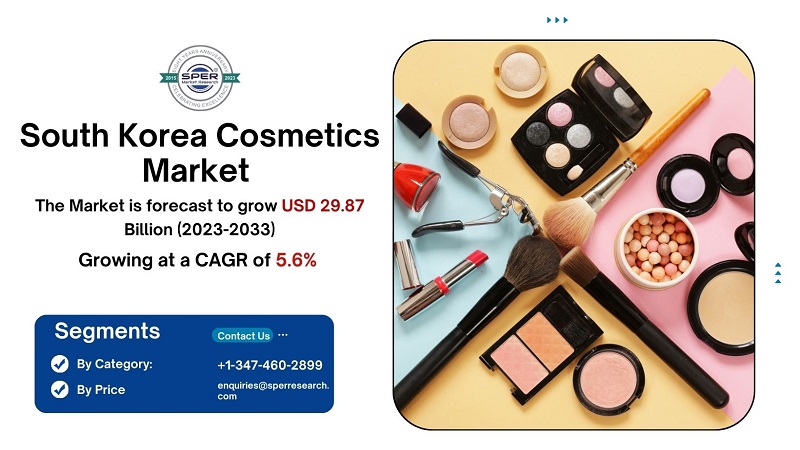
According to SPER market research “South Korea Cosmetics Market Growth, Trends, Analysis, Size- By Category, By Price, By Gender, By Distribution Channels- Regional Outlook, Competitive Strategies and Segment Forecast to 2033” states that the South Korea Cosmetics Market is estimated to reach USD 29.87 billion by 2033 with a CAGR of 5.6%.

Drivers: The growth of the South Korea Cosmetics Market is driven by several key factors. A strong cultural emphasis on aesthetics and skincare has created a consumer base that is highly aware of beauty and seeks innovative products. The global popularity of K-beauty has boosted international demand, leading to increased product development and exports. Technological advancements in skincare formulations, especially in anti-aging and skin-brightening, further support market expansion. Additionally, the influence of K-pop and Korean dramas, through celebrity endorsements and new beauty trends, shapes consumer preferences both domestically and abroad. The rise of e-commerce and digital platforms has also improved cosmetics accessibility, allowing brands to reach a broader audience and enhance customer engagement through personalized marketing and virtual try-on features.

Restraints: The South Korea Cosmetics Market encounters various limitations that may hinder its expansion. The high level of market saturation and competition from both domestic and global brands creates difficulties for new players trying to gain a presence. The frequent introduction of new products and the swift evolution of consumer preferences can result in shorter product life spans and heightened demands for innovation. Moreover, issues related to skin safety, product authenticity, and ingredient transparency could undermine consumer confidence, particularly as awareness of harmful substances and allergies increases. Regulatory challenges and the necessity to adhere to both local and international cosmetic regulations can also create obstacles for producers.

Request For Free Sample Report @ https://www.sperresearch.com/report-store/south-korea-cosmetics-market.aspx?sample=1

Seoul dominates the South Korea Cosmetics Market due to its dense population and high concentration of beauty-conscious consumers. Some of the key players in this market Able C & C Inc., Amore Pacific Corporation, Ko Rendy Cosmetics Inc., LG Household &Health Co. Ltd., Procter & Gamble.

South Korea Cosmetics Market Segmentation:

By Category: Based on the Category, South Korea Cosmetics Market is segmented as; Skin Care(Face Care, Body Care, Lip Care),Hair Care(Shampoo, Conditioners, Others),Bath & Showers(Soap, Shower Gels, Others), Makeup & Colour Cosmetics, Deodorants &Fragrances.

By Price: Based on the Price, South Korea Cosmetics Market is segmented as; Mass, Premium.

By Gender: Based on the Gender, South Korea Cosmetics Market is segmented as; Male, Female, Unisex.

By Distribution Channels: Based on the Distribution Channels, South Korea Cosmetics Market is segmented as; Hypermarkets & Supermarkets, Speciality Stores, Pharmacies/ Drug Stores, Online, Others.

By Region: This research also includes data forSeoul, Busan, Incheon, Daegu, Ulsan.

For More Information, refer to below link: – 

South Korea Cosmetics Market Forecast

Related Reports:

Bottled Water Processing Market Growth, Size, Trends Analysis- By Type, By Packaging, By Technology – Regional Outlook, Competitive Strategies and Segment Forecast to 2034

Sweeteners Market Growth, Size, Trends Analysis- By Type, By Form, By Application – Regional Outlook, Competitive Strategies and Segment Forecast to 2034

Follow Us – 

LinkedIn | Instagram | Facebook | Twitter 

Contact Us: 

enquiries@sperresearch.com 

+1–347–460–2899
South Korea Cosmetics Market

South Korea Skin Care Products Market Trends, Revenue, Scope, CAGR Status, Challenges, Future Opportunities and Forecast Analysis till 2033: SPER Market Research

Cosmetics are items intended to improve or change the state of the skin, hair, nails, and general physical appearance. They include cosmetics like lipstick and foundation, personal care goods like shampoos and deodorants, and skincare products like cleansers and moisturisers. Cosmetics satisfy both aesthetic preferences and medical requirements, making them an important part of personal grooming and self-expression. To meet the rising demand for safer, more environmentally friendly products, the industry has developed to include sophisticated formulations with natural and organic ingredients. People of all ages and genders use cosmetics extensively, which fuels the explosive growth of the worldwide beauty and personal care industry. Furthermore, cultural trends, technology developments, and changing customer preferences all have an impact on the cosmetics sector.

According to SPER Market Research, ‘South Korea Cosmetics Market Growth, Trends, Analysis, Size- By Category, By Price, By Gender, By Distribution Channels- Regional Outlook, Competitive Strategies and Segment Forecast to 2033’ states that the South Korea Cosmetics Market is estimated to reach USD 29.87 billion by 2033 with a CAGR of 5.6%.

Drivers: The global influence of South Korea’s beauty trends, commonly known as “K-Beauty,” is what propels the country’s cosmetics sector. Both local and foreign customers have been drawn to the focus on cutting-edge skincare regimens, creative product formulations, and premium components. Additionally, the demand for Korean cosmetics has increased dramatically on a global scale due to the growing popularity of Korean pop culture, particularly K-pop and K-dramas. The use of natural and organic components and other technological developments in product development, as well as the emergence of e-commerce platforms, have further stimulated market expansion. The market’s growth is further aided by government assistance for the cosmetics sector and rising interest in skincare and personal grooming among both men and women.

Restraints: The South Korean cosmetics business is growing, but it still confronts obstacles including fierce rivalry from many domestic and foreign firms, which makes it hard for newcomers to get a foothold. Due to the growing demand for natural and premium components, the market is also seeing an increase in production costs, which may have an impact on pricing tactics. The sector also has to comply with strict safety and labelling regulations for cosmetics in both home and international markets. Additionally, the market may become saturated as a result of the quick flood of new products, which could overwhelm customers and weaken brand loyalty. The market is also challenged by rising consumer demands for ethical and transparent business practices.

Request For Free Sample Report @ https://www.sperresearch.com/report-store/south-korea-cosmetics-market.aspx?sample=1

South Korea Cosmetics Market is dominated by Seoul due to city’s vibrant retail environment, coupled with its status as a trendsetter in beauty and fashion, makes it the epicenter of K-Beauty innovation and consumption. Some of its key players are – Able C & C Inc., Amore Pacific Corporation, Ko Rendy Cosmetics Inc., LG Household &Health Co. Ltd., Procter & Gamble, Others.

South Korea Cosmetics Market Segmentation:

By Category: Based on the Category, South Korea Cosmetics Market is segmented as; Skin Care(Face Care, Body Care, Lip Care),Hair Care(Shampoo, Conditioners, Others),Bath & Showers(Soap, Shower Gels, Others), Makeup & Colour Cosmetics, Deodorants &Fragrances.

By Price: Based on the Price, South Korea Cosmetics Market is segmented as; Mass, Premium.

By Gender: Based on the Gender, South Korea Cosmetics Market is segmented as; Male, Female, Unisex.

By Distribution Channels: Based on the Distribution Channels, South Korea Cosmetics Market is segmented as; Hypermarkets & Supermarkets, Speciality Stores, Pharmacies/ Drug Stores, Online, Others.

By Region: This research also includes data forSeoul, Busan, Incheon, Daegu, Ulsan.

For More Information, refer to below link: –

South Korea Cosmetics Market Forecast

Related Reports:

Pocket Door Market Growth, Size, Trends Analysis – By Product, By Material, By End-User, By Distribution Channel – Regional Outlook, Competitive Strategies and Segment Forecast to 2034

Electric Kettle Market Growth, Size, Trends Analysis – By Raw Material, By Application, By Distributional Channel – Regional Outlook, Competitive Strategies and Segment Forecast to 2034

Contact Us: 

Sara Lopes, Business Consultant — USA 

enquiries@sperresearch.com 

+1–347–460–2899
South Korea Cosmetics Market

South Korea Cosmetics Market Growth and Size, Emerging Trends, Revenue, CAGR Status, Scope, Challenges, Future Opportunities and Forecast Analysis till 2033: SPER Market Research

A cosmetic is any product designed to clean, enhance, or alter the appearance of the skin, hair, nails, or teeth. This broad category includes grooming essentials like soap, shampoo, shaving cream, and deodorant, as well as beauty products such as makeup, perfume, skin creams, nail polish, and nail paint. Skincare items like cleansers, toners, serums, moisturizers, eye creams, retinol products, and balms are specifically used to nourish, protect, and cleanse the skin. Additionally, general personal care products, including body wash and shampoo, help maintain overall hygiene.

According to SPER Market Research, “South Korea Cosmetics Market Size – By Category, By Price, By Gender, By Distribution Channels – Regional Outlook, Competitive Strategies, and Segment Forecast to 2033,” the South Korea cosmetics market is projected to reach USD 29.87 billion by 2033, growing at a CAGR of 5.6%.

The rising global demand for K-beauty products has enabled South Korean beauty startups to expand internationally. To highlight product quality, many K-beauty companies are heavily investing in innovative and eye-catching packaging. Businesses are also acquiring K-beauty startups and brands to align with cleaner-label trends, such as cruelty-free and eco-friendly claims, which resonate with modern consumers. The influence of K-pop culture also plays a significant role, with fans emulating the beauty trends set by their favorite stars, such as puppy eyes, gradient lips, and glitter accents. Collaborations between K-pop idols and cosmetic brands further boost sales and market growth.

South Korea’s cosmetics industry is fast-paced and highly dynamic, with trends evolving rapidly. Manufacturers often struggle to keep up with shifting consumer demands. Startups, in particular, need to adopt the latest tools and technologies to remain competitive. The industry’s competitiveness requires companies to stay attuned to emerging trends, maintain strict quality and regulatory standards, and launch innovative products at competitive prices.

Request a Free Sample Report: https://www.sperresearch.com/report-store/south-korea-cosmetics-market.aspx?sample=1

As COVID-19 restrictions ease and daily life resumes, more consumers are returning to workplaces, shopping, and social events. This has driven increased demand for premium skincare products, as individuals focus on improving their appearance. Even as mask mandates relax, skincare remains a priority for addressing mask-related skin damage.

In August 2022, South Korean cosmetics manufacturer Cosmax developed bio-nano emulsions to create natural cosmetics without chemical surfactants, relying solely on natural materials and sustainable production methods. Major players in the market include Able C & C Inc., Amore Pacific Corporation, Ko Rendy Cosmetics Inc., and LG Household & Health Co. Ltd., among others.

South Korea Cosmetics Market Segmentation:

By Category: Based on the Category, South Korea Cosmetics Market is segmented as; Skin Care(Face Care, Body Care, Lip Care),Hair Care(Shampoo, Conditioners, Others),Bath & Showers(Soap, Shower Gels, Others), Makeup & Colour Cosmetics, Deodorants &Fragrances.

By Price: Based on the Price, South Korea Cosmetics Market is segmented as; Mass, Premium.

By Gender: Based on the Gender, South Korea Cosmetics Market is segmented as; Male, Female, Unisex.

By Distribution Channels: Based on the Distribution Channels, South Korea Cosmetics Market is segmented as; Hypermarkets & Supermarkets, Speciality Stores, Pharmacies/ Drug Stores, Online, Others.

By Region: This research also includes data forSeoul, Busan, Incheon, Daegu, Ulsan.

For More Information, refer to below link: –

South Korea Cosmetics Market Forecast

Related Reports:

GCC Perfume and Fragrance Market Growth, Size, Trends Analysis- By Category, By Product Type, By End User, By Form, By Distribution Channel- Regional Outlook, Competitive Strategies and Segment Forecast to 2033

Asia Pacific Bath and Shower Products Market Growth, Size, Trends Analysis- By Type, By Distribution Channel- Regional Outlook, Competitive Strategies and Segment Forecast to 2033

Follow Us –

LinkedIn | Instagram | Facebook | Twitter

Contact Us:

Sara Lopes, Business Consultant – U.S.A.

enquiries@sperresearch.com

+1-347-460-2899

South Korea Cosmetics Market Size

South Korea Cosmetics Market Growth, Share, Emerging Trends, CAGR Status, Scope, Challenges, Future Opportunities and Forecast Analysis till 2033: SPER Market Research

Any product used to clean, enhance, or modify the skin, hair, nails, or teeth is referred to as a “cosmetic.” Cosmetics include grooming products like soap, shampoo, shaving cream, and deodorant as well as beauty supplies like makeup, perfume, skin cream, nail paint, and nail polish. Skin care products like as cleansers, toners, serums, moisturisers, eye creams, retinal, and balms can be used to protect, nourish, and cleanse the skin. The body can be cleansed with cosmetics made for more general personal care, including body wash, shampoo, and soap.

According to SPER market research, South Korea Cosmetics Market Size- By Category, By Price, By Gender, By Distribution Channels- Regional Outlook, Competitive Strategies and Segment Forecast to 2033’ state that the South Korea Cosmetics Market is predicted to reach USD 29.87 billion by 2033 with a CAGR of 5.6%.

The enormous demand for K-beauty goods has allowed Korean beauty start-ups to successfully enter the international market. In order to emphasise the qualities of their products, K-beauty product firms are investing more in their packaging. This results in more appealing and imaginative packaging. To keep ahead of the latest trends in the beauty industry, a number of businesses are consciously purchasing K-Beauty start-ups and brands. Claims and goods with cleaner labels, including cruelty-free and eco-friendly, are becoming more and more popular. South Koreans are drawn to their K-pop stars and copy every fad that they adopt. Consumers in the area are drawn to the 2022 K-pop trends, which include puppy eyes, gradient lips, glitter beneath the eyes, and many more. People are interested in obtaining such cosmetics as a result. These reasons are driving the market. K-pop musicians and idols also work with cosmetic and personal care companies. The amount of goods being purchased is rising as a result.

The cosmetics sector in South Korea moves at a very quick speed, is extremely dynamic, and trends shift quickly. As a result, manufacturers are rarely able to meet the constantly evolving wants of their clientele. Furthermore, in order to compete in this industry, startups need to arm themselves with the newest tools and technology. The South Korean cosmetics industry is extremely competitive. In order to stay ahead of the competition, enterprises must thus be extremely sensitive to the rapidly evolving trends in cosmetics and beauty, ensure that their goods meet quality standards and regulatory requirements, and quickly introduce their offerings at the best rates.

Request For Free Sample Report @ https://www.sperresearch.com/report-store/south-korea-cosmetics-market.aspx?sample=1

As the number of COVID-19 cases declines and the government lifts most restrictions, more people are leaving their houses to go shopping and attend social events. Additionally, more customers are going back to their places of employment. As a result, a lot of individuals have been buying high-end skincare products to look better. Despite the fact that using protective face masks is no longer required, customers are still using skincare products to heal skin damage as a result of their frequent usage of masks.

Cosmax, a South Korean company that produces unique cosmetics, created bio-nano emulsions in August 2022 that might be utilised to make pure natural cosmetics in place of chemical surfactants. Consequently, only natural materials and manufacturing techniques would be used to produce cosmetics. Additionally, some of the key market players are Able C & C Inc., Amore Pacific Corporation, Ko Rendy Cosmetics Inc., LG Household &Health Co. Ltd., and some others.

For More Information, refer to below link:-

South Korea Skin Care Products Market Outlook

Related Reports:

Toilet Cleaners Market Size- By Product, By Distribution Channel- Regional Outlook, Competitive Strategies and Segment Forecast to 2033

Premium Bottled Water Market Size- By Product, By Distribution Channel- Regional Outlook, Competitive Strategies and Segment Forecast to 2033

Follow Us –  

LinkedIn | Instagram | Facebook | Twitter

Contact Us:  

Sara Lopes, Business Consultant – USA

SPER Market Research

enquiries@sperresearch.com

+1-347-460-289974

South Korea Cosmetics Market

South Korea Cosmetics Market Growth and Share, Emerging Trends, Scope, Challenges, Future Opportunities and Forecast 2033: SPER Market Research

South Korea’s cosmetics business is vibrant and dynamic, with a significant global reputation and influence. Because of its ground breaking skincare and beauty products, South Korea has emerged as a beauty superpower. The country’s cosmetics industry is fuelled by a strong emphasis on R&D, cutting-edge technology, and a deeply engrained beauty culture. South Korean cosmetics are known for their high-quality ingredients, creative formulae, and trendy packaging that cater to a diverse variety of consumer tastes. K-beauty, as it is commonly known, has gained in popularity around the world, owing primarily to increased demand for skincare products such as sheet masks, essences, serums, and sunscreen. The market is competitive, with various local and worldwide brands competing for customer attention. Because of its innovative products, attention to quality, and loyal customer base, the South

According to SPER market research, ‘South Korea Cosmetics Market Size- By category, By Price, By Gender, By Distribution Channels- Regional Outlook, Competitive Strategies and Segment Forecast to 2033’state that the South Korea Cosmetics Market is predicted to reach USD 29.87 billion by 2033 with a CAGR of 5.6%.

Several factors contribute to the success and expansion of the South Korean cosmetics sector. To begin with, South Korea’s emphasis on research and development (R&D) is crucial. The government invests heavily in scientific research, allowing cosmetic manufacturers to generate unique and effective treatments that address a wide range of skin issues.

Second, the influence of K-beauty culture is important in propelling the market. South Korea has a long-standing beauty tradition that values skincare and self-care activities. This cultural emphasis on beauty and wellbeing has generated enormous domestic demand as well as enthralled consumers internationally.

A variety of issues are threatening the South Korean cosmetics market’s growth and viability. To begin with, severe market competition is a significant challenge. In this category, numerous local and multinational brands battle for customer attention. This competitiveness frequently leads to pricing wars, aggressive marketing strategies, and continual innovation push in order to stand out in a crowded field.

Request For Free Sample Report @ https://www.sperresearch.com/report-store/south-korea-cosmetics-market.aspx?sample=1

The COVID-19 outbreak has had a significant impact on the South Korean cosmetics industry. The sector had supply and demand issues at various periods of the pandemic. Consumer spending initially plummeted during the pandemic’s peak as lockdowns and social distancing efforts limited physical shop options. Because there was less foot traffic, cosmetic companies had to immediately adapt by focusing on online channels and e-commerce platforms to reach consumers. This has resulted in increased investments in digital marketing and e-commerce infrastructure, hastening the growth of the online beauty business.

Geographically, The South Korean cosmetics market primarily caters to both domestic and international consumers. Geographically, the market is not limited to a specific region within South Korea but has a significant presence throughout the country. Major cities such as Seoul, Busan, Incheon, and Daegu are prominent hubs for cosmetics manufacturing, distribution, and retail. These cities host numerous beauty shops, department stores, and specialized beauty districts where consumers can explore a wide array of Korean skincare and makeup products.

Additionally, some of the market key players are: -Able C & C Inc., Amore Pacific Corporation, Ko Rendy Cosmetics Inc., LG Household & Health Co. Ltd., Procter & Gamble, Others.

South Korea Cosmetics Market Key Segments Covered

The SPER Market Research report seeks to give market dynamics, demand, and supply forecasts for the years up to 2033. This report contains statistics on product type segment growth estimates and forecasts.

By Category: Based on the Category, South Korea Cosmetics Market is segmented as; Skin Care(Face Care, Body Care, Lip Care),Hair Care(Shampoo, Conditioners, Others),Bath & Showers(Soap, Shower Gels, Others), Makeup & Colour Cosmetics, Deodorants &Fragrances.

By Price: Based on the Price, South Korea Cosmetics Market is segmented as; Mass, Premium.

By Gender: Based on the Gender, South Korea Cosmetics Market is segmented as; Male, Female, Unisex.

By Distribution Channels: Based on the Distribution Channels, South Korea Cosmetics Market is segmented as; Hypermarkets & Supermarkets, Speciality Stores, Pharmacies/ Drug Stores, Online, Others.

By Region: This research also includes data forSeoul, Busan, Incheon, Daegu, Ulsan.

For More Information, refer to below link:-

South Korea Skin Care Products Market Outlook

Related Reports:

Middle East and Africa Household Care Market Size- By Product Type, By Nature, By Distribution Channel- Regional Outlook, Competitive Strategies and Segment Forecast to 2033

USA Massage Therapy Services Market Size- By Service Type, By Service Provider, By Purpose, By End User, By Booking Channel- Regional Outlook, Competitive Strategies and Segment Forecast to 2033

Follow Us –

LinkedIn | Instagram | Facebook | Twitter

Contact Us:  

Sara Lopes, Business Consultant – USA

SPER Market Research

enquiries@sperresearch.com

+1-347-460-2899