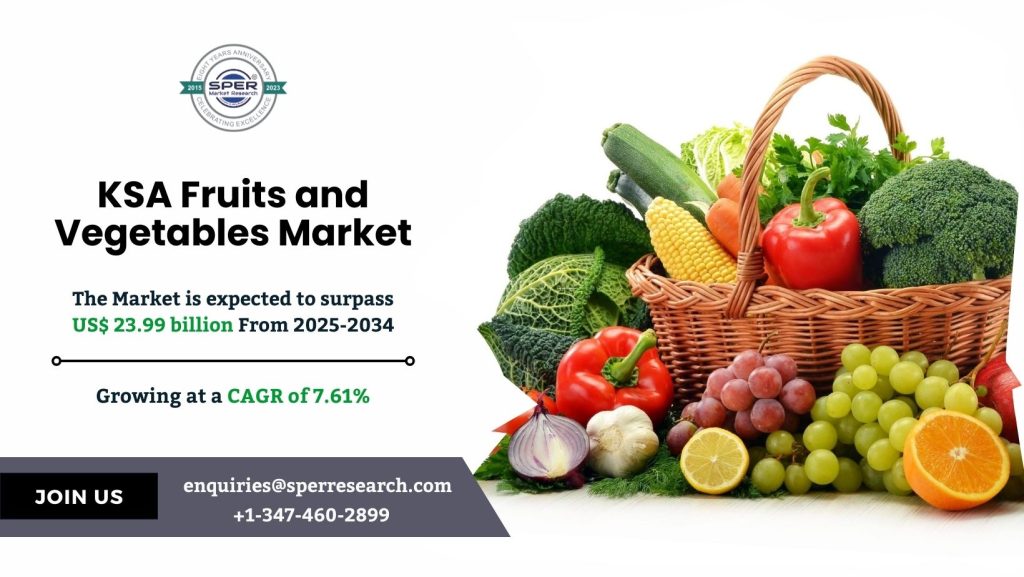
South Korea Fruits and Vegetables Market Share and Analysis 2033

Rich in vitamins, minerals, fiber, and antioxidants, fruits and vegetables are vital parts of a balanced diet. Fruits—such as apples, bananas, and oranges—usually grow from a plant’s blossom and include seeds, which provide natural sweetness and hydration. Carrots, spinach, and broccoli are examples of vegetables, which are edible plant parts such as the roots, stems, leaves, and blossoms. Frequent intake of fruits and vegetables boosts general health, lowers the risk of chronic illnesses, and strengthens the immune system. They are essential to a balanced diet all over the world and come in a vast array of colors, textures, and flavors. They can be eaten raw or cooked.

According to SPER market research, ‘South Korea Fruits and Vegetables Market Size- By Product, By Distribution Channel, By Application- Regional Outlook, Competitive Strategies and Segment Forecast to 2033’ state that the South Korea Fruits and Vegetables Market is estimated to reach USD 23.99 billion by 2033 with a CAGR of 7.61%.

Drivers:

The market for fruits and vegetables in South Korea is expanding steadily due to government programs encouraging good eating practices, growing consumer demand for fresh and organic food, and growing health consciousness. Premium and imported fruits and vegetables are becoming more popular among customers as a result of the expanding middle class and rising disposable incomes. Market expansion is also aided by urbanization and a move toward packaged products that are ready to consume. Consumers now have easier access to fresh vegetables thanks to e-commerce platforms and improvements in the cold chain. Additionally, demand is rising as a result of public campaigns emphasizing the advantages of plant-based diets, particularly among younger generations who are concerned about sustainability and wellness.

South Korea Fruits and Vegetables Market Sample in PDF Format, Click Here

Restraints:

There are a number of obstacles facing the South Korean fruits and vegetables sector, despite encouraging developments. Seasonal production issues and a lack of arable land limit domestic supplies, which increases import dependency and drives up prices. Fruits and vegetables are perishable, which increases post-harvest losses and complicates logistics. Both producers and consumers are impacted by price volatility and supply fluctuations brought on by climate change and harsh weather. Furthermore, local farmers may face competition from imported produce, which would lower their profitability. Purchase decisions are also influenced by consumer worries about food safety and pesticide residues, particularly when it comes to conventionally farmed fruit that lacks traceability or clear certifications.

Seoul dominates South Korea’s fruits and vegetables sector thanks to its massive consumer base, advanced logistics, and supply networks that source produce both locally and nationally. Some of the key market players are Chung Jung Won Co., Ltd., CJ Freshway Corporation, Daesang FNF Co., Ltd., Hanwha Fresh Co., Ltd., Joy Farm Co., Ltd. and others

For More Information, refer to below link: –  

South Korea Fruits and Vegetables Market Growth

Related Reports:  

India Tofu Products Market Size

Asia Pacific Potato Processing Market Size

Follow Us – 

LinkedIn | Instagram | Facebook | Twitter 

Contact Us: 

Sara Lopes, Business Consultant — USA 

SPER Market Research 

enquiries@sperresearch.com 

+1–347–460–2899

South Korea Fruits and Vegetables Market

South Korea Fruits and Vegetables Market Share, Trends, Revenue, Growth Drivers, Business Challenges, Opportunities and Forecast Analysis till 2033: SPER Market Research

Usually, fruits are developed from a plant’s blooms, and it is the sweet, meaty sections that we consume. They are available in a spectrum of colors and are full of fiber, vitamins, and minerals. From delicious oranges to vivid berries, they have it all. Conversely, a broader range of edible plant parts are included in the category of vegetables. Carrots’ rich orange color is due to beta-carotene, which gives leafy greens like spinach a distinct mix of nutrients. Beets and potatoes are two examples of roots that are incredibly rich in vitamins and minerals. Notwithstanding their distinctions, fruits and vegetables are essential components of a well-rounded diet and provide a delightful means of providing our bodies with the necessary nutrients.

According to SPER Market Research, South Korea Fruits and Vegetables Market Size- By Product, By Distribution Channel, By Application, – Regional Outlook, Competitive Strategies and Segment Forecast to 2033’ states that the South Korea Fruits and Vegetables Market is estimated to reach USD 23.99 billion by 2033 with a CAGR of 7.61%.

An increasing number of people are seeking wholesome, natural foods like fruits and vegetables as a result of greater awareness of health and wellness. The demand for fresh, organic, and unprocessed products is growing, which is propelling the expansion of the fruits and vegetables industry. Convenient and easily accessible food options are in more demand as the world’s population continues to rise, especially in urban areas. Since they are vital parts of a balanced diet, fruits and vegetables are consumed in greater quantities as a result of this demographic change. Technological developments in fruit and vegetable processing and packaging have increased shelf life, decreased waste, and increased customer accessibility.

Request For Free Sample Report @ https://www.sperresearch.com/report-store/south-korea-fruits-and-vegetables-market.aspx?sample=1

Consuming food tainted with pathogens, bacteria, viruses, parasites, toxins, or other materials can result in foodborne illness, also referred to as food damage. Fresh veggies have many health benefits, but eating them raw can occasionally lead to food illness from germs. Eating tainted food increases the risk of illness or the development of major diseases. When these contaminants infiltrate the supply chain via different channels, food becomes hazardous to consume. Additional methods of contamination include direct contact with cattle, wildlife, or birds; the use of organic waste and excrement as fertilizer on agricultural land; and post-harvest issues such as worker hygiene.

The fruit and vegetable market in South Korea was affected by COVID-19 in two ways. Due to social alienation, sales at certain traditional stores decreased, but sales online increased dramatically. Due to labor shortages and constraints, the pandemic also caused supply chain disruptions, but overall trade remained constant. This demonstrated the value of food shopping online and the tenacity of South Korea’s agricultural imports.

South Korea Fruits and Vegetables Market Key Players:

Gyeonggi followed by the Seoul due to its large consumer base and efficient logistics holds the largest share in the South Korea Fruits and Vegetables Market. Major players in the market are Chung Jung Won Co., Ltd., CJ Freshway Corporation, Daesang FNF Co., Ltd., Hanwha Fresh Co., Ltd., Joy Farm Co., Ltd., Korea Yakult Co., Ltd., Lotte Fresh Farm Co., Ltd., NongHyup Agribusiness Group, Oriental Trading Co., Ltd., Sempio Foods Company, Others.

Our in-depth analysis of the South Korea Fruits and Vegetables Market includes the following segments:

By Product:

  • Fresh Fruits and Vegetables
  • Frozen Fruits and Vegetables
  • Dried Fruits and Vegetables

By Distribution Channel:

  • Grocery Stores
  • Supermarket/Hypermarkets
  • Online
  • Others

By Application:

  • Raw Eating
  • Juices
  • Salads
  • Preserves and Jams

For More Information, refer to below link: –

South Korea Fruits and Vegetables Market Scope

Related Reports:

North America Fruits & Vegetables Market Size- By Product Type, By Distribution Channel- Regional Outlook, Competitive Strategies and Segment Forecast to 2033

Singapore Plant-based Protein Market Size- By Source, By Type, By Application- Regional Outlook, Competitive Strategies and Segment Forecast to 2033

Follow Us on Social Media:

Contact Us:

Sara Lopes, Business Consultant – U.S.A. SPER Market Research Email: enquiries@sperresearch.com Phone: +1-347-460-2899