Proximity Mobile Payment Market

Proximity Mobile Payment Market Size-Share, Trends, Growth Drivers, Key Players, Business Analysis and Future Opportunity 2033: SPER Market Research

Proximity mobile payment refers to a form of financial transaction conducted using a mobile device, typically a smartphone or a wearable device, in close physical proximity to a point-of-sale (POS) terminal or another mobile device equipped with near field communication (NFC) or other contactless payment technology. This technology enables users to securely authorize payments by simply holding their mobile device near the POS terminal, without the need for physical contact or insertion of a card. Proximity mobile payments leverage encrypted communication protocols to transmit payment information securely between the mobile device and the POS terminal or another device. Popular names of proximity mobile payment systems include Apple Pay, Google Pay, Samsung Pay, and other mobile wallet applications offered by banks and financial institutions.

According to SPER Market Research, Proximity Mobile Payment Market Size- By Product, By End User- Regional Outlook, Competitive Strategies and Segment Forecast to 2033’ states that the Global Proximity Mobile Payment Market is estimated to reach USD 67.47 billion by 2033 with a CAGR of 13.04%.

The widespread adoption of smartphones and the increasing penetration of mobile internet services worldwide have expanded the user base for mobile payment solutions. This trend is further accelerated by the convenience and ease of use offered by mobile wallets and payment apps like Apple Pay, Google Pay, and Samsung Pay, which enables users to make secure transactions with their smartphones at retail stores, transit stations, and other points of sale. The growing preference for contactless payment methods, especially in response to the COVID-19 pandemic, has significantly boosted the demand for proximity mobile payments. Contactless payments are perceived as more hygienic and safer than cash or traditional card payments, driving both consumer adoption and merchant acceptance of NFC-enabled payment technologies.

Request For Free Sample Report @ https://www.sperresearch.com/report-store/proximity-mobile-payment-market.aspx?sample=1

Interoperability and standardization issues among different mobile payment platforms and technologies pose a significant barrier. Consumers may hesitate to adopt mobile payment solutions if they are limited to specific devices or apps, leading to fragmentation in the market and inhibiting seamless user experiences across different merchants and regions. Despite advancements in encryption and tokenization technologies, incidents of data breaches and fraud can undermine consumer confidence in mobile payment systems. Addressing these security challenges requires continuous investment in robust security measures and regulatory frameworks to protect sensitive payment information and mitigate risks. Infrastructure limitations, particularly in developing regions, such as inadequate network coverage and reliable internet connectivity, hinder the widespread adoption of proximity mobile payments.

The Coronavirus pandemic fundamentally affects the Nearness Versatile Installment business. As the world confronted lockdowns, social removal measures, and expanded cleanliness concerns, the interest in contactless and contact-free installment frameworks expanded emphatically. This startling flood in notoriety was generally determined by shoppers’ longing to keep away from actual touch with cash, Visas, and installment terminals to reduce the risk of infection transmission. Versatile wallets and applications, which give a helpful and safe method for making installments utilizing cell phones, have turned into a famous decision for individuals from one side of the planet to the other.

Key Players:

The largest market share for the Global Proximity Mobile Payment Market is held by China due to the integration of a wide range of services beyond payments, including social networking, e-commerce, transportation, and utility payments, creating a seamless and comprehensive mobile payment ecosystem. ACI Worldwide Inc., Alphabet Inc., Apple Inc., Mastercard Incorporated, and Square Inc are a few of the major names in the market.

For More Information, refer to below link:-

Mobile Payment Market Future Scope

Related Reports:      

Middle East and Africa IoT Market Size- By Component, By End User Industry- Regional Outlook, Competitive Strategies and Segment Forecast to 2033

North America Telecom Expense Management Market Size- By Component, By Deployment Type, By Organization Size, By End User- Regional Outlook, Competitive Strategies and Segment Forecast to 2033

Follow Us –

LinkedIn | Instagram | Facebook | Twitter

Contact Us:

Sara Lopes, Business Consultant – U.S.A.

SPER Market Research

enquiries@sperresearch.com

+1-347-460-2899

Proximity Mobile Payment Market

Proximity Payment Market Share, Trends, Revenue, Demand, Growth Strategy, Key Players, Challenges, Opportunities and Forecast Till 2033: SPER Market Research

When a payment device, like a smartphone or contactless card, is physically close to a point-of-sale (POS) terminal or another payment recipient, it can start a proximity payment, also referred to as a contactless payment. This technology eliminates the need for physical contact between the payment device and the terminal, enabling safe and practical transactions. Additionally, the widespread use of proximity payment by stores, the increase in smartphone usage, and the acceleration of faster connectivity have made it possible for consumers and retailers to use smartphones for proximity payment, which is driving market expansion.

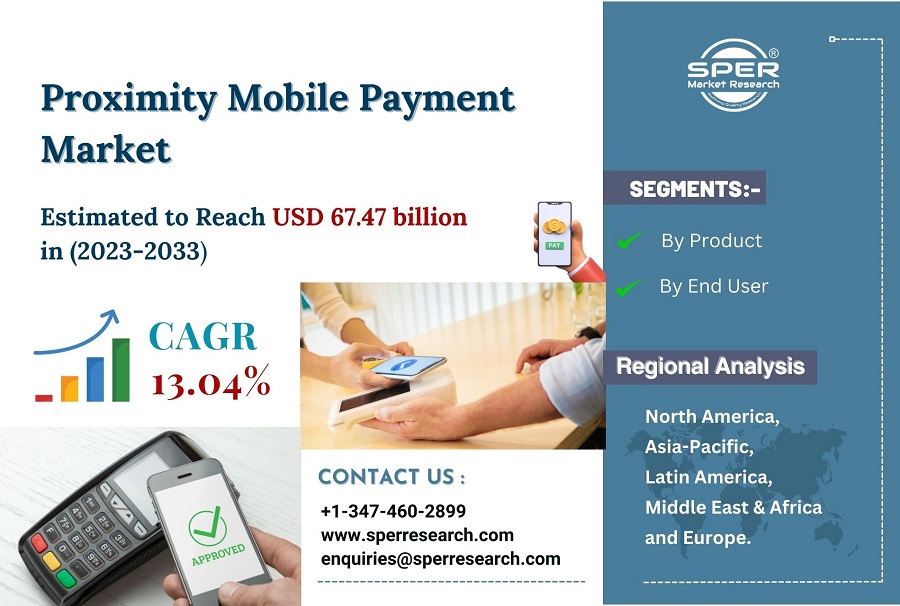
According to SPER market research, Proximity Mobile Payment Market Size- By Product, By End User – Regional Outlook, Competitive Strategies and Segment Forecast to 2033 state that the Proximity mobile payment market is predicted to reach USD 67.47 billion by 2033 with a CAGR of 13.04%.

 Proximity payment offers several advantages, such as instantaneous transaction processing, flexible payment methods, shorter transaction durations, and heightened convenience, all of which foster the market’s expansion. These factors are driving the market’s expansion. The market is expected to grow due to the widespread acceptance of proximity payment by shops, as well as the increased use of smartphones and quicker internet. These factors have made it possible for customers and retailers to perform proximity payments using smartphones.

One major obstacle to the growth of the mobile payment business is security concerns. The likelihood of fraud, identity theft, and data breaches rises with the popularity of digital transactions. Users’ faith in mobile payment systems is impacted by their concerns about the security of their financial information. Strong encryption, authentication techniques, and cybersecurity standards are needed to address these issues. It is imperative to consistently improve security protocols in order to foster consumer trust and encourage broader acceptance of mobile payment systems.

Request For Free Sample Report @ https://www.sperresearch.com/report-store/proximity-mobile-payment-market.aspx?sample=1

The COVID-19 outbreak has had a significant impact on the proximity payment industry since customers worldwide are utilising and embracing online and digital payment methods at a higher rate. Furthermore, in response to COVID-19 concerns, banks and merchants are tightening limitations on proximity payment transactions, allowing higher-value payments to be made without physically touching the device. As a result, amid the global health crisis, this has emerged as a key growth driver for the proximity payment industry.

Proximity Mobile Payment Market Key Players:

Because of the digital economy, it is utilised for a variety of applications, including fraud detection. One of the primary drivers driving market development is an increase in AI investments. North America has the largest revenue share geographically. The expansion is also supported by the growth of the Proximity mobile payment industry and the emergence of prominent companies in the Asia-Pacific market. Furthermore, it is expected that the increased acceptance of proximity mobile payment markets would facilitate operations with the least complex procedures while increasing market power. Additionally, ACI Worldwide Inc, Alphabet Inc, Apple Inc, Mastercard Incorporated, Square Inc, and others.

For More Information, refer to below link:-

Proximity Phone payment market Outlook

Related Reports:      

Smart Home Security Camera Market Size- By Product, By Type- Regional Outlook, Competitive Strategies and Segment Forecast to 2033

Business Software and Services Market Size- By Software, By Service, By Deployment, By Enterprise Size, By End User- Regional Outlook, Competitive Strategies and Segment Forecast to 2033

Follow Us –

LinkedIn | Instagram | Facebook | Twitter

Contact Us:

Sara Lopes, Business Consultant – U.S.A.

SPER Market Research

enquiries@sperresearch.com

+1-347-460-2899

proximity-mobile-payment-market

Proximity Mobile Payment Market Growth- Top Companies Share, Trends Analysis, Size to Surge at a CAGR of 13.04%, Future Challenges and Forecast Strategies till 2023- 2033: SPER Market Research

Proximity mobile payments are POS (Point-of-sale) transactions that use a smartphone or tablet as a payment method. Taping, scanning, swiping, or verifying in at the POS with a mobile device to complete the transaction; accepts digital goods purchases on mobile devices, remote purchases on handheld devices delivered later, and mobile transactions.

According to SPER market research, ‘Global Proximity Mobile Payment Market Size- By Product, By End User  – Regional Outlook, Competitive Strategies and Segment Forecast to 2033’ state that the Global Proximity Mobile Payment is predicted to reach USD 67.47 billion by 2033 with a CAGR of 13.04%.

The Global Proximity Mobile Payment Market is experiencing growth due to several key factors. The Proximity Mobile Payment market is expanding for both businesses and investors. The simplicity and security of Proximity mobile payments have positioned this sector for rapid expansion as the globe becomes increasingly connected through smartphones and other smart devices. Consumers want speedier, contactless, and convenient payment choices, especially in the context of global health and hygiene issues. Furthermore, the introduction of technologies like NFC (Near Field Communication), QR codes, and mobile wallets has made it easier for enterprises to access this market and provide seamless payment experiences.

The Proximity mobile payment sector is expanding, but it also faces huge challenges. Increasing security concerns are one of the biggest challenges since both consumers and organizations want to take strong protections against potential data breaches and cyber threats. Global standards are lacking, which makes standardization more difficult, thus limiting interoperability and causing market fragmentation. The critical challenge of gaining consumer trust still requires extensive work to resolve worries about payment security and data privacy.

Request For Free Sample Report @ https://www.sperresearch.com/report-store/proximity-mobile-payment-market.aspx?sample=1

The Proximity Mobile Payment sector has been greatly impacted by the COVID-19 epidemic. As the necessity for lockdowns, social segregation policies, and growing hygiene concerns increased worldwide, contactless and touch-free payment solutions became increasingly necessary. Consumers’ desire to eliminate physical touch with cash, credit cards, and payment terminals to lower the danger of virus transmission was the main driver behind this unexpected rise in popularity. The use of mobile wallets and applications, which provide a quick and safe way to make payments with smartphones, has increased globally.

Geographically, The market in North America, which includes the United States and Canada, is well-established, driven mostly by tech-savvy customers and a significant presence of mobile wallet providers such as Apple Pay, Google Pay, and PayPal. During the COVID-19 epidemic, adoption rates skyrocketed as safety concerns spurred a move toward contactless payments. Mobile payment solutions have been widely adopted by businesses ranging from retail to quick-service restaurants, and the market is continuing to expand with advances in loyalty programs and connection with other mobile services. Additionally, some of the market key players are ACI Worlwide Inc, Alphabet Inc, Apple Inc, Mastercard Incorporated, Square Inc, Visa Inc, Others.

Global Proximity Mobile Payment Market Segmentation:

By Product: Based on the Product, Global Proximity Mobile Payment Market is segmented as; Barcodes, Near Field Communication.

By End User: Based on the End User, Global Proximity Mobile Payment Market is segmented as; Hospitality and Tourism, IT and Telecommunications, Aviation, Retail, Media and Entertainment, BFSI, Healthcare.

By Region: This report also provides the data for key regional segments of North America, Asia-Pacific, Latin America, Middle East & Africa and Europe.

This study also encompasses various drivers and restraining factors of this market for the forecast period. Various growth opportunities are also discussed in the report.

For More Information, refer to below link:-

Mobile Payment Market Future Opportunity

Related Reports:      

Intelligence Surveillance Reconnaissance Market Size- By Type, By Platform, By Component, By Application- Regional Outlook, Competitive Strategies and Segment Forecast to 2033

Global Mobile Value-Added Services Market Size- By Vertical, By Solution, By End User – Regional Outlook, Competitive Strategies and Segment Forecast to 2033

Follow Us –

LinkedIn | Instagram | Facebook | Twitter

Contact Us:

Sara Lopes, Business Consultant – U.S.A.

SPER Market Research

enquiries@sperresearch.com

+1-347-460-2899

Proximity-Mobile-Payment-Market

Proximity Mobile Payment Market Share 2023, Growth Strategies, Rising Trends, Expanding at a CAGR of XX%, Key Players, Analysis and Future Scope 2027: SPER Market Research

Proximity Mobile Payment is a digital payment method where transactions are conducted using a mobile or smartphone, in close proximity to a payment terminal or compatible device. It eliminates the need for physical cash or cards and uses technologies like NFC or QR codes for secure and contactless transactions. Users can make purchases by tapping, waving, or scanning their mobile devices near payment terminals or by scanning QR codes. Proximity mobile payments also offer convenience, speed, and enhanced security.

According to SPER market research, Proximity Mobile Payment Market Size- By Products, By Applications – Regional Outlook, Competitive Strategies and Segment Forecast to 2033’ state that the Mobile Payment Market is predicted to reach USD 700.4 billion by 2027 with a CAGR of XX%.

The potential user base of smartphones has increased due to their general availability, and customers have been drawn to mobile payments due to its practicality and simplicity. NFC and other contactless technologies have made it easier for mobile payments to be accepted in a variety of retail settings. Users now trust enhanced security measures like tokenization and biometric authentication. The market has grown as a result of a shift in consumer behaviour towards digital transactions. The market has also grown as a result of favourable regulatory settings, expanding merchant acceptance, and successful marketing initiatives.

Different payment systems and technologies are becoming muddled due to a lack of standardisation which serve as a major challenge in the market. In some areas, adoption was hampered by a lack of infrastructure, including POS systems and NFC-capable gadgets. Consumer education regarding the advantages and security of mobile payments was essential. Widespread adoption was hampered by retailers’ limited acceptance. International providers faced compliance challenges as a result of various country rules. Issues with interoperability halted smooth fund transfers between systems. Payment transactions were impacted by connectivity and dependability issues in places with inadequate network coverage. Data collection procedures gave rise to privacy concerns.

Request For Free Sample Report @ https://www.sperresearch.com/report-store/Proximity-Mobile-Payment-Marketanalysis.aspx?sample=1

The COVID-19 pandemic accelerated the adoption of proximity mobile payments as consumers sought contactless options. The simplicity and security that mobile payment apps and services offered were the primary factors in their rising use. Mobile payments for online purchases were further encouraged by the rise of e-commerce during lockdowns. By introducing contactless payment methods, retailers expanded the market. Contactless payments were supported by regulatory modifications such higher transaction limits. But there were difficulties, such as decreased consumer spending and cybersecurity worries. Overall, the pandemic has had a lasting impact on the worldwide proximity mobile payment business by causing a long-term transition towards digital payments and a more cashless society.

Geographically, Asia Pacific emerged as the dominant region in the Proximity Mobile Payment industry. This can be attributed due to the presence of developing nations like Australia, South Korea, Japan, South Korea, and India. These nations offer a stable environment that supports the expansion of the proximity payment sector. Following the government’s demonetization initiative, India has seen a rapid surge in the use of digital wallets and QR code services. Additionally, some of the market key players are PayPal Holdings Inc., Samsung Electronics Co. Ltd., Mastercard Incorporated, Vodafone Group Plc., Apple Inc., Others.

Global Proximity Mobile Payment Market Segmentation:

By Technology: Based on the Type, Global Proximity Mobile Payment Market is segmented as; Classified Barcodes, Near Field Communication.

By Application: Based on the Deployment Model, Global Proximity Mobile Payment Market is segmented as; Hospitality and Tourism, IT and Telecommunications, Aviation, Retail, Media and Entertainment, BFSI, Healthcare.

By Region: This report also provides the data for key regional segments of Asia-Pacific, Europe, Middle East and Africa, North America, Latin America.

This study also encompasses various drivers and restraining factors of this market for the forecast period. Various growth opportunities are also discussed in the report.

For More Information, refer to below link:-

Proximity Transaction Payment Market Future Opportunity

Related Reports:      

ERP Software Market Size- By Function, By Size, By Deployment, By End User- Regional Outlook, Competitive Strategies and Segment Forecast to 2033

Privileged Identity Management Market Size- By Component, By Service, By Deployment Mode, By Installation Type, By Organization Size, By End User- Regional Outlook, Competitive Strategies and Segment Forecast to 2032

Follow Us –

LinkedIn | Instagram | Facebook | Twitter

Contact Us:

Sara Lopes, Business Consultant – U.S.A.

SPER Market Research

enquiries@sperresearch.com

+1-347-460-2899