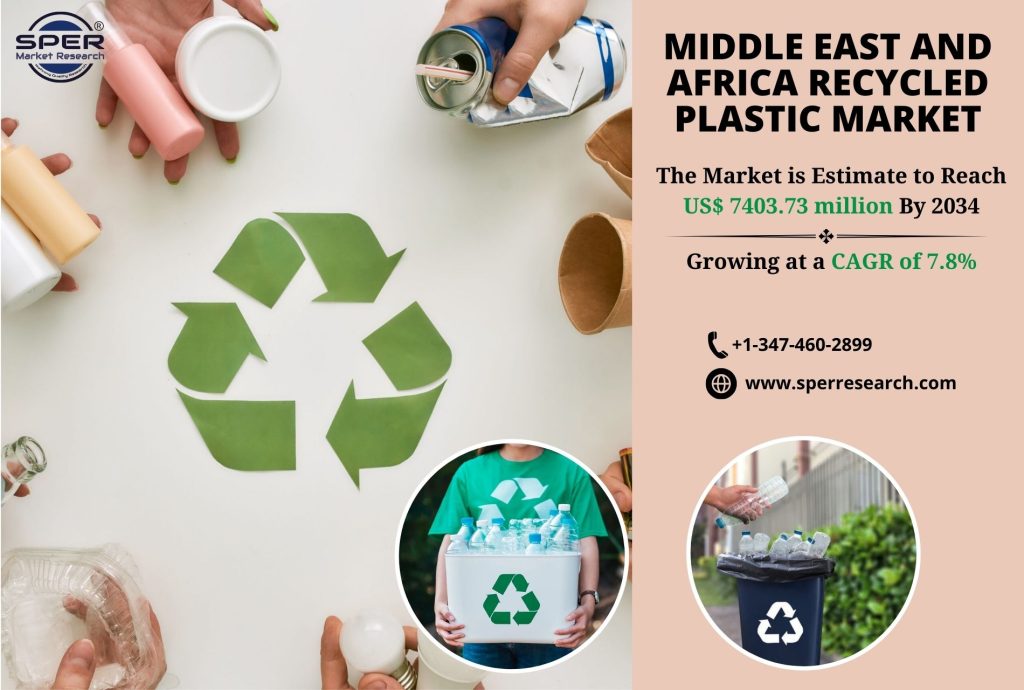
Middle East and Africa Recycled Plastic Market Trends, Demand, Opportunities and Future Competition till 2034: SPER Market Research

The term recycled plastic describes plastic materials that have been gathered, processed, and saved for use in the production of new goods. Waste plastic must be gathered, sorted, cleaned, and broken up into tiny bits before being melted and moulded into new plastic goods. Recycling plastic lessens the negative effects of plastic waste on the environment, preserves natural resources, and lessens the demand for virgin plastics, which are made using a lot of energy and raw materials. Packaging, textiles, building materials, and automobile parts are just a few of the many uses for recycled plastic. The need for recycled plastic is rising as sustainability gains traction on a worldwide scale, helping to create a circular economy and lessen the negative impacts of plastic pollution.

According to SPER Market Research, Middle East and Africa Recycled Plastic Market Size- By Type, By Source -Regional Outlook, Competitive Strategies and Segment Forecast to 2034’ states that the Middle East and Africa Recycled Plastic Market is estimated to reach USD 7403.73 million by 2034 with a CAGR of 7.8%.

Drivers:

The market for recycled plastic in the Middle East and Africa (MEA) is growing as a result of numerous important factors. There is a need for efficient recycling solutions because the region’s growing urbanisation and industrialisation have increased the amount of plastic trash generated. Markets for recycled plastic are benefiting from government policies that limit plastic pollution, such as prohibitions on single-use plastics and recycling incentives. Furthermore, the market for goods made from recycled materials is expanding due to rising consumer awareness of environmental sustainability, which encourages manufacturers to use recycled plastics in their production processes. The use of recycled plastics is further fuelled by the growing need for environmentally friendly packaging options.

Restraints:

The profitability of recycling operations may be impacted by changes in the price of raw materials. Purchasing, handling, and distributing recycled plastic materials have been impacted by supply chain interruptions made worse by the COVID-19 epidemic. The recycling procedure itself also has drawbacks, such as contaminated recyclables and the requirement for cutting-edge technology to increase productivity. Market expansion is also hampered by competition from virgin plastics and other biodegradable goods. Additionally, low recycling rates impede efforts to create a sustainable circular economy since firms and customers are unaware of the advantages of using recovered plastic products and the significance of recycling. Infrastructure, technology, and education investments are necessary to address these issues.

Request a Free Sample Report: https://www.sperresearch.com/report-store/mea-recycled-plastic-market.aspx?sample=1

The COVID-19 pandemic had a significant influence on the MEA recycled plastic market. At first, recycling efforts were hampered by lockdowns and travel restrictions, which decreased the quantity of recycled plastic that could be bought. Demand for goods created from recycled plastics declined as a result of the economic crisis, especially in non-essential sectors including consumer goods, construction, and the automobile industry. But because consumers were more conscious of environmental issues, the pandemic also sped up the adoption of sustainable methods. The demand for environmentally friendly items, such as those manufactured from recycled plastics, has increased as a result of this change in consumer behaviour. The market for recovered plastic could profit from this increased environmental awareness when the area recovers.

 Middle East and Africa Recycled Plastic Market is dominated by United Arab Emirates (UAE) due to industrialization and urbanization, with significant growth in construction, automotive, and packaging sectors. Some of its key players are – Berry Global Inc., B & B Plastics Inc., B. Schoenberg & Co. Inc., Birch Plastics Inc., ENVISION PLASTICS.

For More Information, refer to below link: –  

Middle East and Africa Recycled Plastic Market Growth

Related Reports:  

Organic Peroxide Market Growth, Size, Trends Analysis – By Product, By Application – Regional Outlook, Competitive Strategies and Segment Forecast to 2034

Synthetic Lubricants Market Growth, Size, Trends Analysis – By Product, By Application – Regional Outlook, Competitive Strategies and Segment Forecast to 2034

Follow Us – 

LinkedIn | Instagram | Facebook | Twitter 

Contact Us: 

Sara Lopes, Business Consultant — USA 

SPER Market Research 

enquiries@sperresearch.com 

+1–347–460–2899
MEA Recycled Plastic Market

MEA Recycled Plastic Market Growth, Industry Share, Upcoming Trends, Revenue, Business Opportunities, Challenges and Forecast Analysis till 2033: SPER Market Research

Plastic that has been processed and repurposed after its original lifetime is known as recycled plastic. To make new plastic products, the procedure usually entails gathering spent plastic bottles, containers, and packaging materials, cleaning them, and then melting them down. By lowering the quantity of plastic waste that ends up in landfills and the ocean, recycling plastic helps to reduce environmental pollution. Additionally, it reduces the requirement for the resource- and energy-intensive process of producing virgin plastic, which calls for the extraction of natural gas or petroleum. Numerous products, such as new bottles, bags, furniture, building materials, and more, can be made from recycled plastic.

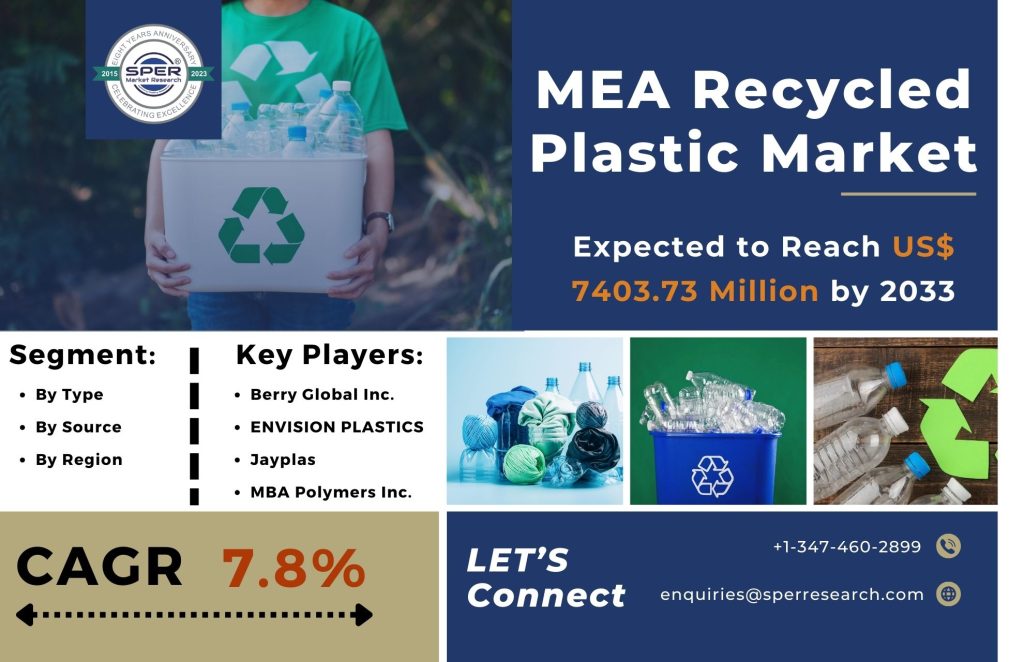
According to SPER market research, Middle East and Africa Recycled Plastic Market Size – By Type, By Source – Regional Outlook, Competitive Strategies and Segment Forecast to 2033’ state that the MEA Recycled Plastic Market is predicted to reach USD 7403.73 million by 2033 with a CAGR of 7.8%.

Drivers:

A number of significant factors are driving the rapid growth of the recycled plastic market in the Middle East and Africa. One significant incentive is the increased awareness and focus on environmental protection and sustainability. Governments, businesses, and consumers have all become more conscious of the negative effects that plastic pollution has on ecosystems, which has sparked initiatives to promote recycling and reduce plastic waste. Laws aimed at curbing plastic pollution, such as those that forbid single-use plastics and provide incentives for recycling, are also creating an environment that is conducive to the growth of the recycled plastic sector. Moreover, the region is rapidly industrializing and urbanizing, creating a large amount of plastic waste and raising the demand for recycled plastic materials and efficient waste management techniques.

Challenges:

The pandemic’s aftermath will disrupt the supply chain, raw material prices will fluctuate, and challenges with recycling will hamper the market’s expansion. The fierce rivalry between virgin plastics and other biodegradable goods would also impede the market’s growth. Customers and businesses alike also lack a sufficient understanding of the advantages of using products made of recycled plastic and the significance of recycling. The creation of a sustainable circular economy is hampered by this lack of awareness, which also contributes to low recycling rates.

Request For Free Sample Report @ https://www.sperresearch.com/report-store/mea-recycled-plastic-market.aspx?sample=1

Impact of COVID-19 on GCC Recycled Plastic Market

The Middle East and African recycled plastic industry has been impacted by the COVID-19 pandemic in a number of ways. The early consequences of the pandemic on supply chains and industry had an impact on the procurement, handling, and distribution of recycled plastic materials. Implemented to stop the virus’s spread, lockdowns and travel limits hindered recycling efforts and decreased the amount of recovered plastic that was sold. Furthermore, the economic fallout from the pandemic has changed consumer behavior and the demand for recycled plastic items in the industrial sector. Recycled plastic materials became less in demand as a result of a drop in production and sales at many businesses, especially those in non-essential industries like consumer products, construction, and automobiles.

MENA Recycled Plastic Market Key Players:

Additionally, some of the market key players are Berry Global Inc., B & B Plastics Inc., B. Schoenberg & Co., Inc., Birch Plastics Inc., ENVISION PLASTICS, Jayplas, Joe’s Plastics, K K Asia (HK) Ltd., KW Plastics, MBA Polymers Inc.,

MEA Recycled Plastic Market Segmentation:

The SPER Market Research report seeks to give market dynamics, demand, and supply forecasts for the years up to 2033. This report contains statistics on product type segment growth estimates and forecasts.

By Type: Based on the Type, Middle East and Africa Recycled Plastic Market is segmented as; Polyethylene terephthalate, Polyethylene, Polypropylrnr, Polyvinyl Chloride, Polystyrene, Others.

By Source: Based on the Source, Middle East and Africa Recycled Plastic Market is segmented as; Bottles, Bags, Films, Fibers, Foams, Others.

By Region: This research also includes data for Eastern Region, Western Region, Northern Region, Southern Region.

This study also encompasses various drivers and restraining factors of this market for the forecast period. Various growth opportunities are also discussed in the report.

For More Information, refer to below link:-

Middle East and Africa Recycled Plastic Market Revenue

Related Reports:

Vietnam Recycled Plastics Market Size- By Material, By Application- Regional Outlook, Competitive Strategies and Segment Forecast to 2033

USA and Canada Packer Bottle Market Size- By Material Type, By Capacity, By Application, By End Use- Regional Outlook, Competitive Strategies and Segment Forecast to 2033

Follow Us –

LinkedIn | Instagram | Facebook | Twitter

Contact Us:

Sara Lopes, Business Consultant – U.S.A.

SPER Market Research

enquiries@sperresearch.com

+1-347-460-2899