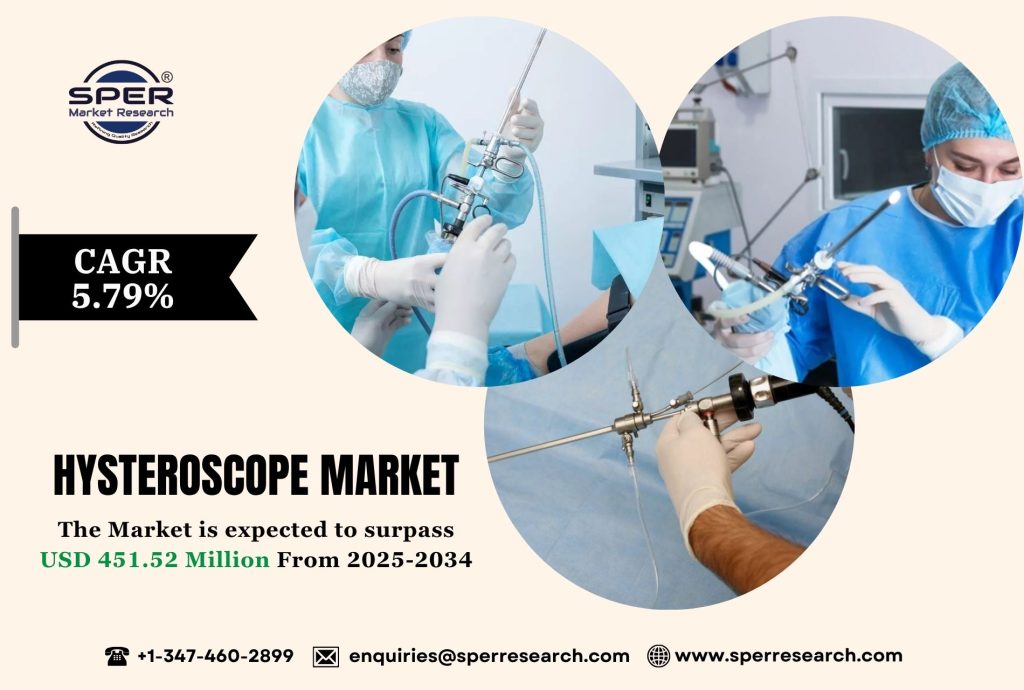
Hysteroscope Market Analysis, Growth, Size and Future Outlook 2034

A hysteroscope is a thin, lighted, tube-like medical instrument used to examine the inside of the uterus. It is inserted through the vagina and cervix, allowing doctors to diagnose and sometimes treat problems within the uterine cavity without the need for incisions. Commonly used in procedures such as the investigation of abnormal bleeding, fibroid removal, or polyp detection, the hysteroscope provides a clear, magnified view of the uterine lining. It plays a critical role in minimally invasive gynecological surgeries, enhancing both accuracy and recovery time. Depending on how complicated the surgery is, hysteroscopy can be done in a hospital or a clinic.

According to SPER Market Research, “Global Hysteroscope Market Growth, Size, Trends Analysis – By Product, By Application, By End User – Regional Outlook, Competitive Strategies and Segment Forecast to 2034” states that Hysteroscope Market is estimated to reach USD  451.52 million by 2034 with a CAGR of 5.79%.

Drivers:

The hysteroscope market is experiencing steady growth due to several key factors. One major contributor is the rise in the female geriatric population, which is often more prone to gynecological conditions requiring diagnostic and therapeutic procedures. Additionally, the increasing prevalence of gynecological disorders has created a greater demand for effective and less invasive treatment options. The growing preference for minimally invasive procedures, such as hysteroscopy, has further fueled market expansion. The adoption of office-based hysteroscopy is also rising, offering convenience and cost-effectiveness. Moreover, continuous technological advancements in hysteroscopic instruments and imaging capabilities are enhancing procedural accuracy and patient outcomes, driving overall market development.

Request a Free Sample Report: https://www.sperresearch.com/report-store/hysteroscope-market.aspx?sample=1

Restraints:

The growth of the hysteroscope market may be limited to some extent due to the availability of alternative diagnostic and treatment options for gynecological conditions, such as ultrasound, MRI, or laparoscopic procedures. These alternatives are often preferred in certain clinical scenarios based on patient condition, cost, or physician expertise. Additionally, the use of hysteroscopes can be associated with side effects or complications such as infection, uterine perforation, or cramping, which may discourage both patients and healthcare providers from opting for hysteroscopy. These factors collectively pose challenges to the widespread adoption and may slightly restrain the overall market growth despite its many advantages.

United States of America owns the biggest revenue share in Global Hysteroscope Market. This dominance is attributed to factors like advanced healthcare infrastructure, high research and development spending, and a significant number of endometrial cancer cases in the region, driving the need for diagnostic hysteroscopes. Some of the key market players are Olympus (Olympus Corporation), Stryker, Karl Storz SE & Co. KG, Boston Scientific Corporation, Richard Wolf GmbH, Medtronic.

For More Information, refer to below link: –  

Hysteroscope Market Growth

Related Reports:  

Global Cardiology Information System Market Growth

Vaginitis Therapeutics Market Size

Follow Us – 

LinkedIn | Instagram | Facebook | Twitter 

Contact Us: 

Sara Lopes, Business Consultant — USA 

SPER Market Research 

enquiries@sperresearch.com 

+1–347–460–2899
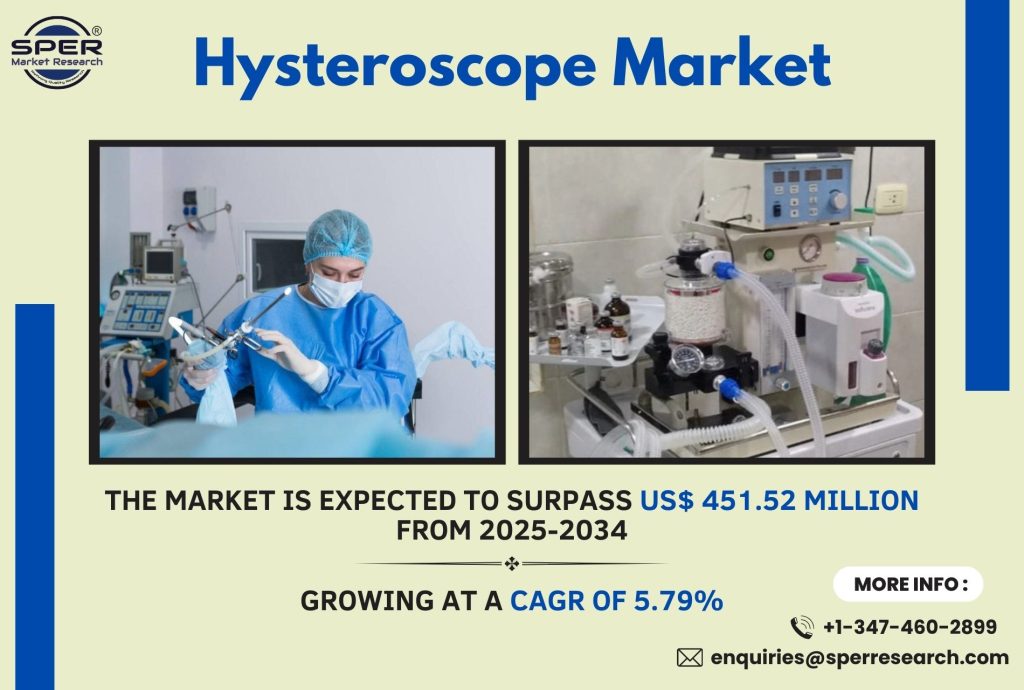
Hysteroscope Market Analysis, Revenue, Growth, Trends, Challenges and Forecast 2034: SPER Market Research

Hysteroscope is a narrow, illuminated tube that physicians use to look inside the uterus for both medical and therapeutic reasons. It is placed through the cervix and vagina, eliminating the need for incisions and providing direct view of the uterine interior. The hysteroscope, which also has a camera and light, helps detect abnormalities like fibroids, adhesions, or polyps by sending images to a monitor. Additionally, hysteroscope are employed for operations like biopsy, polyp removal, and endometrial ablation. These days, hysteroscope can be rigid or flexible, and they frequently have surgical instrument channels, making them useful tools for minimally invasive gyns. We refer to the process as hysteroscopy.

According to SPER market research, ‘Global Hysteroscope Market Size- By Product, By Application, By End User – Regional Outlook, Competitive Strategies and Segment Forecast to 2034’ state that the Global Hysteroscope Market is predicted to reach 451.52 million by 2034 with a CAGR of 5.79%.

Drivers:

Global healthcare spending is rising, especially in emerging nations, which encourages the use of cutting-edge medical equipment like hysteroscope and propels market expansion. Demand for hysteroscope is rising as a result of a growing acceptance of hysteroscopy as a less invasive technique, as well as increased awareness of its advantages among patients and healthcare professionals. The hysteroscope market is expanding due to ongoing technical improvements that improve patient outcomes and diagnostic accuracy, such as the incorporation of high-definition imaging and less invasive procedures. As a diagnostic and therapeutic tool, hysteroscope are becoming more and more necessary as gynecological problems including irregular uterine bleeding and polycystic ovarian syndrome (PCOS) become more common.

Request a Free Sample Report: https://www.sperresearch.com/report-store/hysteroscope-market.aspx?sample=1

Restraints:

Hysteroscopy infection control is still a major concern, and the requirement for strict sterilization procedures can be difficult, especially in healthcare facilities with limited resources. The market for hysteroscope may be constrained by the availability of substitute diagnostic techniques like magnetic resonance imaging (MRI) and ultrasound, particularly when these substitutes are thought to be adequate. Particularly in areas with tighter budgets and lesser healthcare spending, the high upfront and ongoing costs of Hysteroscopic equipment may restrict market expansion. The availability of qualified medical personnel is essential for the effective use of hysteroscopy. The broad use of Hysteroscopic procedures may be impeded by limited access to education and training.

 United States established a dominant position and rose to the top of the market. The advanced healthcare system in United States played a major role in the widespread usage of hysteroscope. Some significant market players are Olympus (Olympus Corporation), Stryker, Karl Storz SE & Co. KG, Boston Scientific Corporation, Richard Wolf GmbH, Medtronic, B. Braun SE, Hologic, Inc., CooperSurgical Inc., Cook Medical.


For More Information, refer to below link: –  

Hysteroscope Market Growth

Related Reports:  

DNA Microarray Market Growth, Size, Trends Analysis – By Type, By Application, By End Use – Regional Outlook, Competitive Strategies and Segment Forecast to 2034


Tissue Diagnostics Market Growth, Size, Trends Analysis – By Technology, By Application, By Modality, By End Use – Regional Outlook, Competitive Strategies and Segment Forecast to 2034

Follow Us – 

LinkedIn | Instagram | Facebook | Twitter 

Contact Us: 

Sara Lopes, Business Consultant — USA 

SPER Market Research 

enquiries@sperresearch.com 

+1–347–460–2899