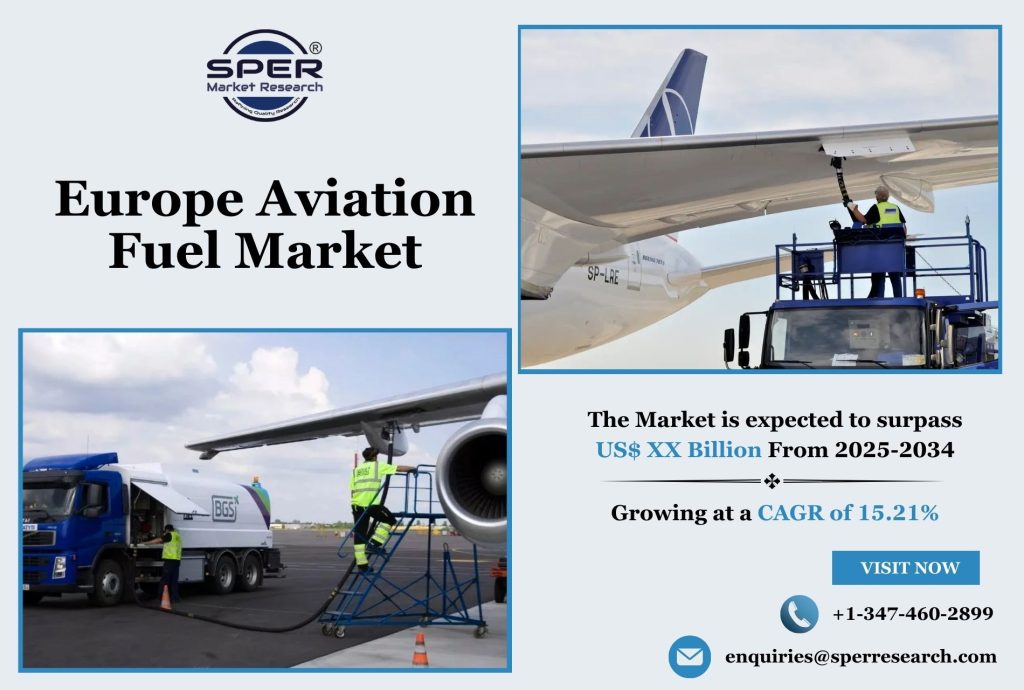
Europe Aviation Fuel Market Share, Size, Revenue, Trends, Challenges and Future Outlook Till 2034: SPER Market Research

Aviation fuel is a specific sort of petroleum-based fuel used to propel airplanes. It is intended to meet the demanding performance, safety, and efficiency demands of aviation engines. The most prevalent form is jet fuel, namely Jet A and Jet A-1, which are kerosene-based and intended for turbine engines in commercial aircraft. Aviation gasoline (avgas) is used in tiny piston-engine airplanes. Aviation fuel must be rich in energy, resistant to freezing, and stable at different altitudes and temperatures. The industry is progressively focusing on sustainable aviation fuel (SAF) to reduce carbon emissions and improve environmental sustainability. Aviation fuel is essential to the worldwide air transportation business, supporting passenger and freight movement while promoting economic growth and connectivity.

According to SPER Market Research, Europe Aviation Fuel Market Size- By Fuel Type, By Application- Regional Outlook, Competitive Strategies and Segment Forecast to 2034′ states that the Europe Aviation Fuel Market is estimated to reach USD XX billion by 2034 with a CAGR of 15.21%.

The European aviation fuel market is influenced by several key drivers. Economic growth and increased disposable income have led to a rise in air passengers, boosting the demand for aviation fuel. The expansion of e-commerce and global trade has heightened the need for air freight services, contributing to increased aviation fuel consumption. European airlines are investing in newer, more fuel-efficient aircraft to meet rising passenger demand and enhance operational efficiency, thereby influencing fuel consumption patterns. Environmental regulations and emissions reduction targets are propelling the adoption of SAF, with the European SAF market projected to grow significantly in the coming years. Ongoing enhancements in airport infrastructure and refueling facilities support the efficient distribution and availability of aviation fuel across the region.

The European aviation fuel market faces several challenges that may impede its growth. One significant restraint is the high initial investment required for the production and infrastructure development of sustainable aviation fuels. Establishing SAF production facilities and refueling infrastructure at airports demands substantial capital, which can deter potential investors and stakeholders. Additionally, the fluctuating cost of crude oil and other lubricants poses a challenge. Variations in these costs can affect the pricing and competitiveness of SAFs, making it difficult for producers to maintain consistent pricing strategies. Furthermore, the limited availability of feedstocks suitable for SAF production restricts scalability. The competition for these feedstocks with other industries can lead to supply constraints, hindering the ability to meet growing demand.

Request a Free Sample Report: https://www.sperresearch.com/report-store/europe-aviation-fuel-market.aspx?sample=1

The COVID-19 pandemic significantly impacted the European aviation fuel market, leading to a substantial decline in air travel and, consequently, aviation fuel demand. The pandemic’s economic effects also influenced carbon pricing. Initially, the European Union Allowance (EUA) price fell by a substantial amount, but it has since recovered to above pre-pandemic levels, driven in part by the EU ETS Market Stability Reserve. Additionally, the pandemic’s impact on the aviation value chain led to a decrease in airline sector Return on Invested Capital (ROIC). These factors collectively contributed to a challenging environment for the European aviation fuel market during the pandemic.

Russia is the country that dominates the aviation fuel market in Europe. This is due to Russia’s government’s efforts to develop more fuel-efficient and environmentally friendly aviation technologies. Some of its key players are- BP PLC, Exxon Mobil Corporation, Gazprom Neft PJSC, Neste Oyj and Repsol SA.

For More Information, refer to below link: –  

Europe Aviation Fuel Market Growth

Related Reports:  

Fishing Drones Market Growth, Size, Trends Analysis – By Type, By Payload Capacity, By Application, By End User – Regional Outlook, Competitive Strategies and Segment Forecast to 2034

Drones for Emergency Responders Market Growth, Size, Trends Analysis – By Drone Type, By Application, By Level of Autonomy, By End User – Regional Outlook, Competitive Strategies and Segment Forecast to 2034

Follow Us – 

LinkedIn | Instagram | Facebook | Twitter 

Contact Us: 

Sara Lopes, Business Consultant — USA 

SPER Market Research 

enquiries@sperresearch.com 

+1–347–460–2899
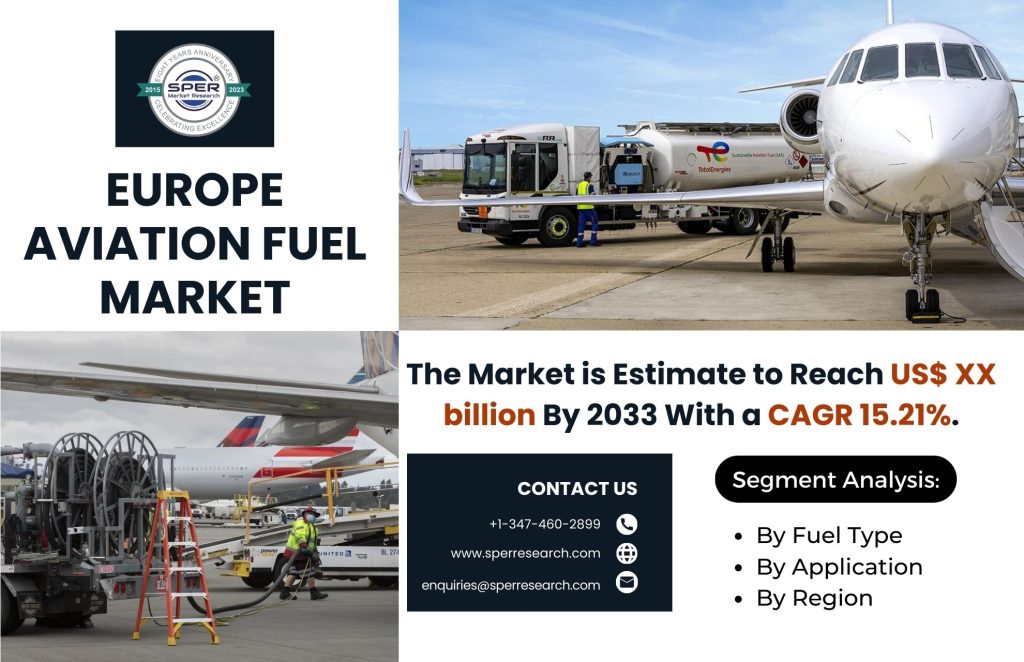
Europe Aviation Fuel Market

Europe Aviation Fuel Market Share 2023- Industry Trends, Revenue, Growth Drivers, CAGR Status, Business Challenges, Opportunities and Future Strategies till 2033: SPER Market Research

Aviation fuel, which is derived from petroleum or kerosene, is used to power aircraft. Compared to fuels used in other forms of transportation, aviation fuel is of a higher caliber. They are made from various blends of kerosene, such as kerosene and biofuel or gasoline, among others. By including materials such as corrosion inhibitors, aviation fuels lower the possibility of icing or explosions caused by high temperatures. Most military and commercial aircraft use aviation fuel primarily to reduce operating costs and maximize fuel efficiency. 

According to SPER market research, Europe Aviation Fuel Market Size – By Fuel Type, By Application – Regional Outlook, Competitive Strategies and Segment Forecast to 2033 state that the Europe Jet Fuel Market is predicted to reach USD XX billion by 2033 with a CAGR of 15.21%.  

Increased disposable income, improved economic conditions, and a rise in air travel are some of the main market drivers. This growth has also been aided by recent drops in airfare. The market is expanding significantly due to the industry’s efforts to use more biofuels.  Furthermore, the aviation fuel industry has a lot of room to grow because of developing sustainable aviation fuels (SAF) and biofuels that can significantly reduce carbon emissions. 

Furthermore, the market is anticipated to grow primarily due to the anticipated increase in air transportation and the increased demand from the military sector. The growth of the aviation fuel market is fueled by an increase in fuel demand brought on by new airports and flight routes. 

Numerous complex issues that affect the dynamics and sustainability of the European aviation fuel market are present there. The main obstacle is the volatile oil price, which is affected by both economic and geopolitical developments. The aviation industry is facing increased regulatory pressure to comply with environmental mandates, which is driving the need for investments in sustainable aviation fuels, or SAFs. To move to SAFs, obstacles like inadequate infrastructure must be addressed, which calls for large investments and adjustment periods. Variations in market demand brought on by world events or economic conditions present additional challenges for the aviation fuel supply chain. 

Request For Free Sample Report @ https://www.sperresearch.com/report-store/europe-aviation-fuel-market.aspx?sample=1

Impact of COVID-19 on Europe Aviation Fuel Market

The European aviation fuel market has experienced a significant and unparalleled impact due to the COVID-19 pandemic. The consumption of aviation fuels decreased abruptly and significantly as a result of widespread travel restrictions, lockdowns, and a sharp decline in the demand for air travel worldwide. An unprecedented crisis for airlines led to aircraft groundings, flight delays, and dire financial repercussions. In addition to significantly lowering the demand for aviation fuel, this sharp decline in air travel also caused supply chain disruptions throughout. Fuel was in excess because refineries were having trouble adjusting their output levels. Fuel prices fell precipitously as a result of the mismatch between supply and demand, severely hurting the earnings of oil and airline companies. 

Europe Aviation Fuel Market Key Players:

Spain is currently leading the market in the region and is expected to maintain its dominance throughout the forecast period as well. Spain has the largest market size in Europe. Additionally some of the market players are: BP PLC, Exxon Mobil Corporation, Gazprom Neft PJSC, Neste Oyj, Repsol SA, Royal Dutch Shell PLC, Total SA. 

Europe Aviation Fuel Market Segmentation:

The SPER Market Research report seeks to give market dynamics, demand, and supply forecasts for the years up to 2033. This report contains statistics on product type segment growth estimates and forecasts.

By Fuel Type: Based on the Fuel Type, Europe Aviation Fuel Market is segmented as; Air Turbine, Aviation Biofuel, AVGAS.

By Application: Based on the Application, Europe Aviation Fuel Market is segmented as; Commercial, Defence, General Aviation.

By Region: This research also includes data for The United Kingdom, France, Germany, Spain, Rest of Europe.

This study also encompasses various drivers and restraining factors of this market for the forecast period. Various growth opportunities are also discussed in the report.

For More Information, refer to below link:-

Europe Aviation Fuel Market Future Outlook

Related Reports:

Aircraft Cabin Interior Market Size- By Class, By Type, By End-User, By Product Type, By Aircraft Type- Regional Outlook, Competitive Strategies and Segment Forecast to 2033

Gunshot Detection System Market Size By Product, By Application, By Installation, By System- Regional Outlook, Competitive Strategies and Segment Forecast to 2033

Follow Us –    

LinkedIn | Instagram | Facebook | Twitter

Contact Us:

Sara Lopes, Business Consultant – U.S.A.

SPER Market Research

enquiries@sperresearch.com

+1-347-460-2899