Dietary Fibers Market

Dietary Fibre Market Share 2023- Global Industry Size, Demand, Revenue, Growth, Emerging Trends, Business Challenges and Future Outlook till 2032: SPER Market Research

Dietary fibres are polysaccharides made of carbohydrates that, when taken, are not completely broken down by the digestive system’s enzymes. They so take up water and begin to ferment, which encourages the formation of healthy bacteria in the colon. Fruits, vegetables, and whole grains all include dietary fibre. Plant compounds or inedible parts are used to make fibre. Plant foods including fruits, vegetables, and legumes are the main source of dietary fibres, though they can be found in a wide variety of meals. These fibres assist your body eliminate waste, lower blood sugar and cholesterol to lower the risk of diabetes and heart disease, and support you in maintaining a healthy weight. Businesses in the food and beverage, pharmaceutical, and animal feed industries can all benefit from dietary fibres. 

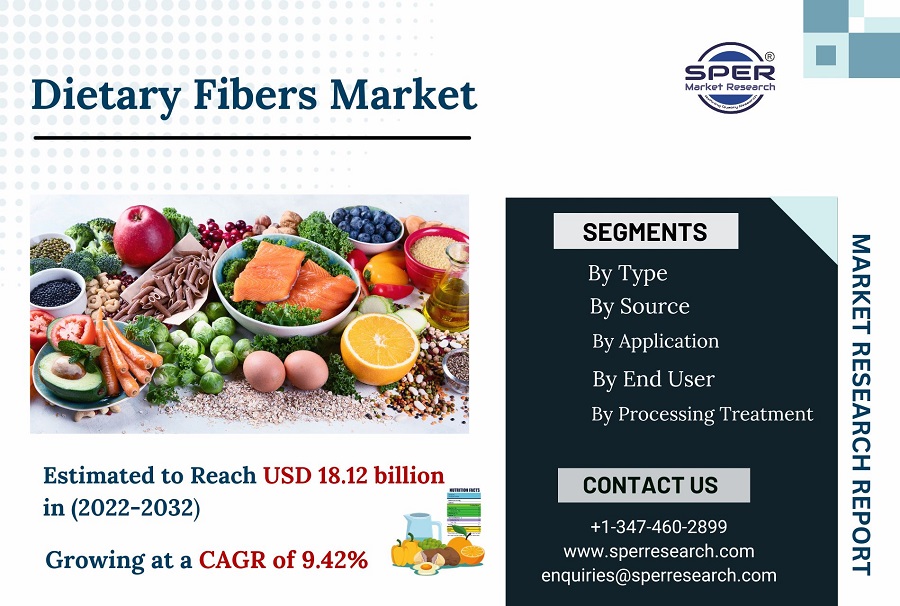
According to SPER market research, Dietary Fibre Market Size- By Type, By Source, By Application, By End User, By Processing Treatment- Regional Outlook, Competitive Strategies and Segment Forecast to 2032’ state that the Global Dietary Fibre Market is predicted to reach USD 18.12billion by 2032 with a CAGR of  9.42%. 

The global market for dietary fibres is anticipated to be driven by rising health consciousness and a shift toward a more balanced way of living. Dietary fibres control a number of bodily processes, including blood sugar levels, metabolic diseases including diabetes and obesity, and gastrointestinal health. High-calorie and sugar-based items are thought to play a major role in the rising number of obese kids. Food items are to blame, including sweetened beverages, pastries, cookies, and confections made with sugar among others. Dietary fibres take the role of fats or sugars by supplying extra nutritional value and reducing the amount of fats or sugars added to the products. This drives up demand for dietary fibres and propels the market’s expansion. Dietary fibres are also employed as prebiotic agents, hydrocolloid and bulking agents, and sugar and low-fat substitutes.   

Although some customers find fibre-enriched products less appetizing, there are issues with taste preferences and perceived texture. However, adding dietary fibre to food formulations might raise the price of the final product, which may prevent it from being widely used. Finally, manufacturer navigation of strict compliance methods is influenced by regulatory standards and labelling regulations, which increase complexity. Overcoming these obstacles and realizing the full potential of the dietary fibre market will require constant innovation and consumer education initiatives. 

Request For Free Sample Report @ https://www.sperresearch.com/report-store/dietary-fibers-market.aspx?sample=1

Impact of COVID-19 on Dietary Fibers Market

The market for dietary fibres was positively affected by the Covid-19 epidemic because of its known uses in medications, animal feed, and nutritional supplements. Because the products were effective in boosting immunity and muscle mass, there was a strong demand for them throughout the epidemic. In addition, as people became more aware of the health benefits, they consumed more fruits, vegetables, cereals, and grains, as well as nuts. This contributed to the market’s expansion throughout the epidemic. 

Dietary Fibers Market key players

The easiest access to cereals and grains, such as corn, oats, brown rice, barley, buckwheat, bulgur, and millet in the United States, is anticipated to propel North America’s growth during the projection period. Moreover, the market is expanding in this area due to a number of health problems, including obesity and high cholesterol, which have raised consumer demand for fruits and vegetables. Additionally, the key market players are  PURIS, Roquette Freres, Taiyo International, Tate & Lyle, The Green Labs LLC, Others.  

Dietary Fibers Market Segmentation:

The SPER Market Research report seeks to give market dynamics, demand, and supply forecast for the years up to 2032. This report contains statistics on product type segment growth estimates and forecasts.

By Type

Insoluble

Soluble

By Source

Fruits & Vegetables

Cereals & Grains

Nuts & Seeds

Legumes, Others

By Application

Food and Beverages

Pharmaceuticals,

Animal Feed,

Pet Foods, Others

By End User

Waste Movement,

Cholesterol Management

Weight Management

Sugar Management

This study also encompasses various drivers and restraining factors of this market for the forecast period. Various growth opportunities are also discussed in the report.

For More Information, refer to below link:-

Dietary Fibers Market Revenue

Related Reports:

Europe Sports Nutrition Market Size- By Product Type, By End User- Regional Outlook, Competitive Strategies and Segment Forecast to 2033

Oman Frozen Bakery Products Market Size- By Product Type, By Distribution Channel- Regional Outlook, Competitive Strategies and Segment Forecast to 2033

Follow Us –  

LinkedIn | Instagram | Facebook Twitter 

Contact Us: 

Sara Lopes, Business Consultant – U.S.A. 

SPER Market Research 

enquiries@sperresearch.com

+1-347-460-2899

Dietary-Fibers-Market

Dietary Fibers Market Growth 2022, Industry Share, Upcoming Trends, CAGR Status, Revenue, Business Strategies and Future Opportunities 2032: SPER Market Research

Various foods contain dietary fibres, which are primarily sourced from plant foods such fruits, vegetables, and legumes. By lowering blood sugar and cholesterol, these fibres assist the body move waste, lower the risk of diabetes and heart illnesses, and maintain healthy weight. Pharmaceuticals, food & beverage, animal feed, and other businesses can all benefit from dietary fibres.

According to SPER market research, ‘Global Dietary Fibers Market Size- By Type, By Source, By Application, By End User, By Processing Treatment- Regional Outlook, Competitive Strategies and Segment Forecast to 2033’ state that the Global Dietary Fibers Market is predicted to reach USD 18.12 billion by 2032 with a CAGR of 9.42%.

Consumers’ increasing propensity for natural goods is a key factor influencing market expansion. The market is growing as a result of growing awareness of the advantages of dietary fibres for health and preventative healthcare. Demand for dietary fiber-rich foods has increased due to a growth in the consumption of functional foods, which provide important nutrients as well as the ability to boost health. A significant growth opportunity is expected to be created by an increase in urban population and increased public awareness of the health advantages of dietary fibres. The market for dietary fibres is expected to grow as more women enter the workforce and have more discretionary cash.

Due to growing consumer awareness and interest in dietary fibre, there is a greater need for functional foods. Customers prefer dietary supplements over other readily available health and dietary supplements because they are plant-based. As a result, consumers are adding dietary fibres to their daily meals, which is driving market expansion.

Request For Free Sample Report @ https://www.sperresearch.com/report-store/dietary-fibers-market.aspx?sample=1

Dietary fibres, however, only have a small market because too much of them can cause diarrhoea, poor mineral absorption, and the expulsion of good cholesterol. As a result, it is anticipated that strict government rules relating to dietary fibres may limit market expansion.

Additionally, COVID-19 had a negligible impact on the market for dietary fibres. Dietary fibres are present in a wide range of goods, including food, supplements, and medications. Dietary fibres are additionally used to boost immune system function and muscle mass. Products containing dietary fibre were therefore much sought after throughout the pandemic. Additionally, consumers began regularly ingesting dietary fibres, which helped the sector grow.

Geographically, due to rising consumer awareness, high disposable income, rising demand for functional foods, and the population’s desire for a healthy, active lifestyle, North America has the largest market for dietary fibres globally. Additionally, some of the market key players are AGT Food and Ingredients, Archer Daniels Midland Company (ADM), BENEO, Cargill, Incorporated, DuPont de Nemours, Inc., Ingredion Incorporated, The Green Labs LLC, Others

Our in-depth analysis of the Dietary Fibers Market includes the following segments:

The SPER Market Research report seeks to give market dynamics, demand, and supply forecasts for the years up to 2032. This report contains statistics on product type segment growth estimates and forecasts.

By Type:

  • Insoluble
  • Cellulose
  • Hemicelluloses
  • Chitin & Chitosan
  • Lignin
  • Oat Bran

By Source:

  • Fruits & Vegetables
  • Cereals & Grains
  • Wheat
  • Rice
  • Bran
  • Others
  • Nuts & Seeds
  • Legumes
  • Others

By Application:

  • Food and Beverages
  • Pharmaceuticals
  • Animal Feed
  • Pet Foods
  • Others

By End User:

  • Waste Movement
  • Cholesterol Management
  • Weight Management
  • Sugar Management

By Processing Treatment:

  • Extrusion Cooking
  • Canning
  • Grinding
  • Boiling
  • Frying

This report also provides the data for key regional segments of North America, Europe, Asia-Pacific and Rest of the World.

This study also encompasses various drivers and restraining factors of this market for the forecast period. Various growth opportunities are also discussed in the report.

For More Information, refer to below link: –

Dietary Fibers Market Future Opportunities

Related Reports:

Saudi Arabia Snack Bar Market Size- By Type, By Distribution Channel- Regional Outlook, Competitive Strategies and Segment Forecast to 2033

Flavoured Tea Ingredients Market Size- By Type, By Form- Regional Outlook, Competitive Strategies and Segment Forecast to 2033

Follow Us –

LinkedIn | Instagram | Facebook | Twitter

Contact Us:

Sara Lopes, Business Consultant — USA

SPER Market Research

enquiries@sperresearch.com

+1–347–460–2899

Dietary Fibers Market

Dietary Fibers Market Revenue, Size, Trends, Industry Report 2022, Future Growth, Sales Analysis, Forecast 2032: SPER Market Research

According to SPER Market Research, Increased investments in the pharmaceutical industry and a significant movement in consumer choice away from pharmaceutical products toward nutraceuticals products are two factors anticipated to enhance demand throughout the projected period. Increasing consumer awareness of the need of maintaining a healthy diet may also aid market growth. Among other significant benefits, a healthy diet encourages an active lifestyle by lowering the risk of lifestyle disorders like hypertension, diabetes, and cardiovascular disease. Dietary fibers are extracted from a variety of sources via wet processing, dry processing, chemical, gravimetric, physical, enzymatic, and microbiological methods. The aforementioned methods, either individually or in combination, can result in the desired outcomes. Variable treatment methods have different effects on how dietary fibers are composed. Improvements in the production process and the huge potential for dietary fibers to be used in various food products are likely to stimulate demand. Consuming dietary fiber helps humans maintain a healthy digestive system and prevent constipation. If a person has irritable bowel syndrome, their diet should be altered and contain more fiber (IBS). Additionally, it is anticipated that this will increase demand among IBS sufferers globally for dietary fiber supplements.

Dietary Fibers Market Overview:

  • Forecast CAGR (2022-2032): 9.42%
  • Forecast Market Size (2032): 18.12 billion

The COVID-19 outbreak has very little of an influence on the dietary fiber market. The huge range of products that contain dietary fibers includes pharmaceuticals, nutritional supplements, and animal feed, to name just a few. Dietary fibers are additionally used to boost immunity and muscle mass. As a result, during the outbreak, there was a high demand for items containing dietary fiber. Furthermore, customers began including dietary fibers in their regular meals, which had an effect on the market’s expansion as a whole. COVID-19 had hardly any impact on the market for dietary fibers.

Additionally, dietary fibers are employed to increase immunity and muscular building. As a result, there was a strong demand for products containing dietary fiber during the epidemic. Additionally, consumers started including dietary fibers in their daily diets, which affected the performance of the market as a whole. The wide availability of grains and cereals such as oats, whole wheat, rye, corn, popcorn, barley, brown rice, wild rice, buckwheat, triticale, bulgur, and millet is expected to increase the need for dietary fibers. Even though dietary fibers are widely known for their physiological impacts, they are indigestible. Fibers are inefficient as a source of energy since they are resistant to hydrolysis and pass through the body intact. When this factor is employed as a component in food and beverage applications, it poses a challenge.

Request For Free Sample Report @ https://www.sperresearch.com/report-store/dietary-fibers-market.aspx?sample=1

The Global Dietary Fibers Market study provides market data by the competitive landscape, revenue analysis, market segments, and detailed analysis of key market players such as: AGT Food and Ingredients, Archer Daniels Midland Company (ADM), Batory Foods, BENEO, Cargill, Incorporated, DuPont de Nemours, Inc., Emsland Group, Farbest Brands, Ingredion Incorporated, J. Rettenmaier & Söhne GmbH + Co KG, Kerry Inc., Lonza, Nexira, PURIS, Roquette Freres, Taiyo International, Tate & Lyle, The Green Labs LLC.

SPER Market Research study aims to provide market dynamics, demand, and supply with a yearly forecast for 2032. This report provides data for growth estimates and forecasts for product type segment – By Type (Insoluble, Soluble), By Source (Fruits & Vegetables, Cereals & Grains, Nuts & Seeds, Legumes, Others), By Application (Food and Beverages, Pharmaceuticals, Animal Feed, Pet Foods, Others), By End User (Waste Movement, Cholesterol Management, Weight Management, Sugar Management), By Processing Treatment (Extrusion Cooking, Canning, Grinding, Boiling, Frying).

This report also provides data for key regional segments of North America, Europe, Asia-Pacific, and the Rest of the World.

This study also encompasses various market drivers and restraining factors for the forecast period. Various growth opportunities are also discussed in the report.

For More Information, refer to below link: –

Dietary Fibers Market Future Outlook

Related Reports:

Fishmeal and Fish Oil Market Size- By Source, By Livestock Application, By Industrial Application- Regional Outlook, Competitive Strategies and Segment Forecast to 2032

Cheese Powder Market Size- By Application, By Product Type, By Distribution Channel- Regional Outlook, Competitive Strategies and Segment Forecast to 2032

Follow Us –

LinkedIn | Instagram | Facebook | Twitter

Contact Us:

Sara Lopes, Business Consultant — USA

SPER Market Research

enquiries@sperresearch.com

+1–347–460–2899