Biogas Compression Market Dynamics 2024, Key Players, Growth Drivers, Challenges, Business Opportunities and Future Revenue Forecast till 2033: SPER Market Research

The technique of compressing biogas, which is created when organic materials like sewage, food scraps, and agricultural waste are broken down anaerobically, is known as biogas compression. Through this process, biogas’s energy density is increased, making it simpler to store, transport, and use for a variety of purposes, including the production of power, heating, and fuel for vehicles. The process of turning biogas into biomethane, a refined version of biogas that satisfies requirements for natural gas quality, requires compression. Compressors for biogas are made to withstand the special qualities of biogas, such as its fluctuating moisture content and composition. Biogas compression is essential for optimizing the effectiveness and sustainability of biogas as a sustainable energy source as interest in renewable energy sources rises. 

According to SPER Market Research, Biogas Compression Market Size- By Application, By Feedstock, By Type- Regional Outlook, Competitive Strategies and Segment Forecast to 2033’ states that the Biogas Compression Market is estimated to reach USD 2.74 billion by 2033 with a CAGR of 6.29%. 

Drivers: Numerous variables influence the biogas compression industry. Interest in biogas as a sustainable energy option has increased due to the growing worldwide demand for renewable energy sources and initiatives to cut greenhouse gas emissions. Investments in biogas technology, such as compression systems, are encouraged by government incentives and subsidies for renewable energy projects. The increased emphasis on recycling and waste management, especially in the agricultural and municipal sectors, increases the generation of biogas and calls for effective compression techniques. Furthermore, improvements in compression technology boost the dependability and efficiency of biogas systems, increasing their appeal to operators. The need for biogas compression is growing, driven by industry efforts to achieve sustainability targets. 

Restraints: There are many obstacles that the biogas compression market must overcome to continue growing. Variability in the composition of biogas is one major problem that might impact compression system performance and efficiency. Furthermore, methane compression equipment might have substantial upfront capital expenses, which puts smaller operators and projects at a disadvantage. The commercial adoption of biogas technologies may also be slowed by potential consumers’ lack of knowledge and comprehension of them. A further obstacle to the widespread use of biogas compression is competition from other energy sources like natural gas and other renewables. In conclusion, investors and market operators may experience uncertainty due to regulatory and environmental issues around the production and utilization of biogas. 

Request For Free Sample Report @ https://www.sperresearch.com/report-store/biogas-compression-market.aspx?sample=1

Impact of COVID-19 on Global Biogas Compression Market

The COVID-19 epidemic caused supply chain disruptions that delayed the production and installation of equipment, which influenced the biogas compression business. Lockdowns and other limitations made it more difficult to create and implement projects, especially in industries that are essential to the generation of biogas, such waste management and agriculture. But the epidemic also brought attention to the significance of sustainable energy options, raising interest in and knowledge of biogas as a renewable resource. Green technologies are receiving more attention as economies grow again, and companies and governments are realizing how important biogas is to reaching sustainability objectives. After the pandemic, this change could result in more investments in biogas compression technology. 

Biogas Compression Market Key Players:

North America dominates the Biogas Compression Market, driven by the increasing adoption of renewable energy sources and supportive government policies promoting biogas as a sustainable alternative. Major players in the market are Aerzen, Avelair, Bauer Compressors INC, Biokomp Srl, Chicgo Pneumatic, DBS Engineering Services, Others. 

For More Information, refer to below link: –

Biogas Compression Market Demand

Related Reports:

Bottle Capping Machine Market Size- By Technology, By Cap Type, By End User, By Operating Speed- Regional Outlook, Competitive Strategies and Segment Forecast to 2033

New Zealand Used Car Market Growth, Trends, Analysis, Size- By Vehicle Type, By Vendor Type, By Fuel Type – Regional Outlook, Competitive Strategies and Segment Forecast to 2033

Follow Us –

LinkedIn | Instagram | Facebook | Twitter

Contact Us:

Sara Lopes, Business Consultant — USA

SPER Market Research

enquiries@sperresearch.com

+1–347–460–2899

Biogas Compression Market

Biogas Compression Market Growth, Share, Latest Trends, Industry Demand, Growing CAGR, Challenges, Business Opportunities and Forecast Analysis till 2033: SPER Market Research

Biogas that has been compressed to a pressure of typically 200–300 bar is known as compressed biogas (CBG). Organic wastes, such as sewage, municipal solid waste, and agricultural waste, decompose anaerobically to produce biogas, an environmentally favourable energy source. In order to increase biogas’ energy density and make storage and transit easier, it must be compressed. Carbon dioxide, sulphur dioxide, moisture, and other impurities are eliminated from biogas to purify it. Next, sophisticated equipment is used to compress it. The finished product, CBG, may be used directly in place of fossil fuels like natural gas or liquefied petroleum gas (LPG) for a variety of applications, including heating, cooking, and transportation.

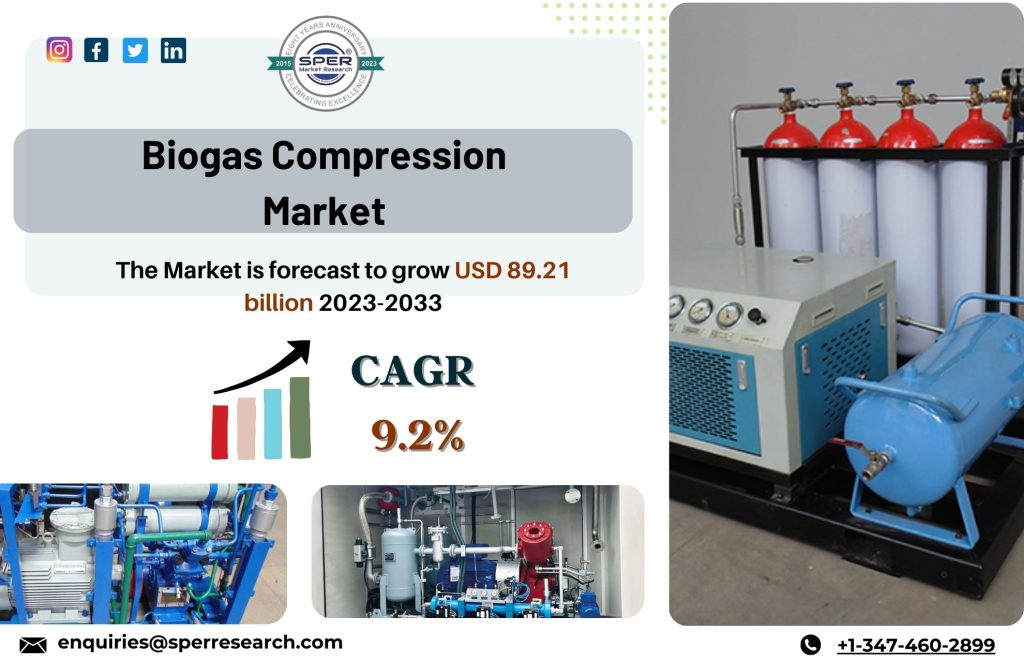
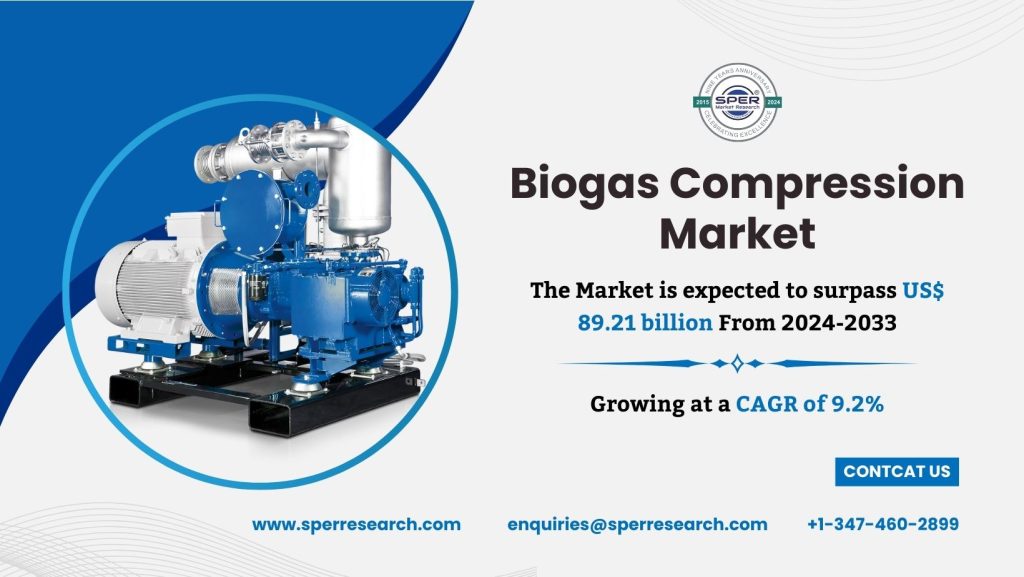
According to SPER market research, Biogas Compression Market Size– By Application, By Feedstock, By Type- Regional Outlook, Competitive Strategies and Segment Forecast to 2033’ state that the Global Biogas Compression Market is predicted to reach USD 89.21 billion by 2033 with a CAGR of 9.2%.

A primary driver of the biogas compression business is the global transition away from traditional fossil fuels and towards renewable, sustainable energy sources.  Governments everywhere are putting increasing pressure on business to use greener energy sources, such as biogas, by enforcing stricter environmental regulations and emission limitations. The demand for effective waste management solutions, particularly in the municipal and agricultural sectors, is driving up the requirement for biogas compression. Biogas is a preferred substitute for imported fossil fuels in energy diversification since it reduces a region’s dependency on them.  Compressed biogas is a renewable energy source that may also be used to make extra money by selling the electricity it produces.

Request For Free Sample Report @ https://www.sperresearch.com/report-store/biogas-compression-market.aspx?sample=1

Methane compression system development comes with high upfront costs, which may deter small-scale biogas producers in particular.  The compression process may be challenging for some market participants and need accurate engineering and maintenance skills. For regions without the necessary infrastructure to use biogas, there may be obstacles in the biogas compression industry.  Biogas faces competition from other renewable energy sources such as wind and solar power, which might limit its market development. Efficient transportation and storage of compressed biogas can pose challenges, particularly when handling vast distances.

Impact of COVID-19 on Global Biogas Compression Market

The Covid-19 pandemic brought up a variety of responses in the biogas compression business. Even if lockdown precautions briefly delayed project completion and the supply chain, the pandemic also highlighted the importance of dependable and sustainable energy sources. As countries focus on green recovery and try to recover more sustainably, the demand for biogas and the technology used to compress it is predicted to grow faster.

Biogas Compression Market Key Players:

Geographically, North America has been a leader in the development of biogas compression technology. Because of its extensive natural gas infrastructure, strict environmental restrictions, and growing goals for renewable energy. The transportation industry in the region has a lot of room to develop, especially when it comes to using renewable natural gas (RNG) in automobiles. Additionally, some of the market key players are Aerzen, Avelair, Bauer Compressors INC, Biokomp Srl, Chicgo Pneumatic, DBS Engineering Services and others.

Global Biogas Compression Market Segmentation:

By Application: Based on the Application, Global Biogas Compression Market is segmented as; Heat Generation, Power Generation, Transportation, Upgraded Biogas

By Feedstock: Based on the Feedstock, Global Biogas Compression Market is segmented as; Agriculture Residue, Bio-Municipal Waste, Energy Crops

By Type: Based on the Type, Global Biogas Compression Market is segmented as; Diaphragm, Liquid Ring, Piston, Screw, Vane

By Region: This research also includes data for North America, Asia-Pacific, Latin America, Middle East & Africa and Europe.

This study also encompasses various drivers and restraining factors of this market for the forecast period. Various growth opportunities are also discussed in the report.

For More Information, refer to below link: –

Biogas Compression Market Future Outlook

Related Reports:

Lithium-Ion Battery Recycling Market Size- By Battery Chemistry, By Source, By Recycling Process, By End User- Regional Outlook, Competitive Strategies and Segment Forecast to 2033

Saudi Arabia Fuel Station Market Size- By Fuel, By End User- Regional Outlook, Competitive Strategies and Segment Forecast to 2033

Follow Us –

LinkedIn | Instagram | Facebook | Twitter

Contact Us:

Sara Lopes, Business Consultant — USA

SPER Market Research

enquiries@sperresearch.com

+1–347–460–2899