Asia-Pacific Fruits and Vegetables Market

Asia-Pacific Fruits and Vegetables Market Trends, Revenue, Share, CAGR and USD Status, Challenges, Future Strategy and Growth Opportunities 2033: SPER Market Research

The fruits and vegetable sector includes a vast variety of food plants, both fresh and processed. This varied category includes fruits like apples, bananas, and berries, as well as vegetables like carrots, spinach, and bell peppers. The sector contributes significantly to health and wellness by providing critical vitamins, minerals, and dietary fibre. Fruits and vegetables can be eaten fresh, cooked, or juiced, making them flexible ingredients in many different cuisines around the world. Seasonal fluctuations frequently influence availability, with certain foods peaking at specific periods of the year, reflecting regional agriculture techniques. Furthermore, the industry is distinguished by its reliance on both traditional farming techniques and modern agricultural technologies. Sustainable approaches, such as organic farming and integrated pest management, are increasingly being utilized to ensure the quality and safety of these essential food items for consumers

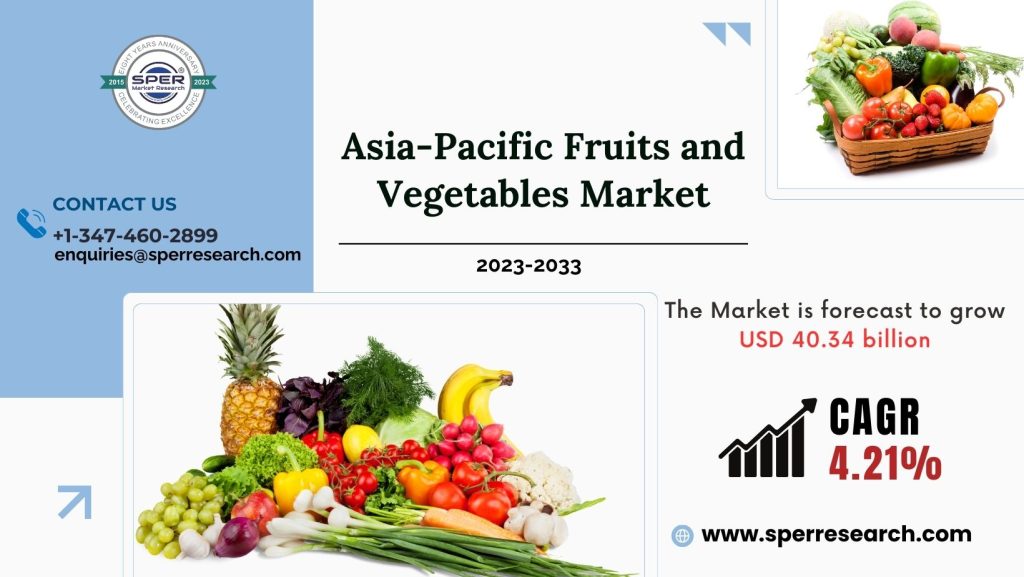
According to SPER Market ResearchAsia-Pacific Fruits and Vegetables Market Size- By Type, By Product Type, By Category, By Nature, By Flavour, By Packaging, By End User- Regional Outlook, Competitive Strategies and Segment Forecast to 2033’ states that the Asia-Pacific Fruits and Vegetables Market is estimated to reach USD 40.34 billion by 2033 with a CAGR of 4.21%.

Drivers: The market for fruits and vegetables in the Asia-Pacific region is growing due to numerous important factors. Fresh produce is in greater demand as a result of growing consumer awareness of nutrition and health, as more people place a higher priority on eating a balanced diet full of fruits and vegetables. Furthermore, the region’s middle class is expanding due to urbanization, and this has increased the number of consumers, raising their purchasing power and altering their eating patterns. Precision farming and better supply chain logistics are two examples of agricultural innovations that increase production and lower post-harvest losses. Moreover, the growth of e-commerce platforms makes fresh produce more accessible and supports the increasingly popular practice of doing grocery shopping online.

Request For Free Sample Report @ https://www.sperresearch.com/report-store/apac-fruits-and-vegetables-market.aspx?sample=1 

Restraints: The Asia-Pacific fruits and vegetable market confronts various constraints that may impede its expansion. Climate change poses a significant concern since it can cause irregular weather patterns, reducing agriculture production and quality. Furthermore, limited infrastructure, particularly in rural areas, impedes effective transportation and storage, resulting in substantial post-harvest losses. Regulatory hurdles and different quality requirements across countries can hinder trade and lead to supply discrepancies. Furthermore, competition from imported goods can put a strain on local farmers and producers, making it difficult for them to compete on price and quality. Finally, shifting consumer preferences and increased health concerns might divert demand away from certain fruits and vegetables, altering market dynamics.

The COVID-19 pandemic had a huge influence on the Asia-Pacific fruit and vegetable market, disrupting supply chains and harming production and distribution. Lockdowns and restrictions caused labour shortages on farms, resulting in lower yields and higher waste. Furthermore, customer purchasing patterns changed, with a growing emphasis on internet shopping, posing challenges for traditional distribution channels. However, the crisis raised awareness of the value of fresh produce for health, which could lead to a long-term boost in demand for fruits and vegetables as consumers emphasize nutrition.

Asia-Pacific fruits and vegetable market is dominated by China due to its vast agricultural production capabilities. Major players in the market are Barfoots, DGM Growers., Fresh Fruits Company, Global Green Company, and GreenyardIQF Foods Private Ltd.

For More Information, refer to below link: - 

Asia-Pacific Fruits and Vegetables Market Scope

Related Reports:

Europe Mushroom Coffee Market Size- By Form, By Packaging, By Distribution Channel, By Caffeine Content, By Mushroom Extract- Regional Outlook, Competitive Strategies and Segment Forecast to 2033

South America Cashew Market Size- By Type, By Service Type, By Restaurant Type, By Cuisine Type- Regional Outlook, Competitive Strategies and Segment Forecast to 2033

Middle East and Africa Edible Oil Market Size- By Type, By Package Type, By Distribution Channel, By End User- Regional Outlook, Competitive Strategies and Segment Forecast to 2033

Follow Us –

LinkedIn | Instagram | Facebook | Twitter

Contact Us:  

Sara Lopes, Business Consultant – USA

SPER Market Research

enquiries@sperresearch.com

+1-347-460-2899

Asia-Pacific Fruits and Vegetables Market

Asia-Pacific Fruits and Vegetables Market Size-Share, Revenue, Emerging Trends, Growing CAGR, Business Challenges and Forecast 2033: SPER Market Research

Fruits have flavors that range from sweet to sour. All other components of a plant that can be eaten, including the roots, stems, leaves, and even flowers, are considered vegetables. Vegetables and fruits are abundant in dietary fiber, vital minerals, and vitamins. These nutrients are essential for immune system stimulation, chronic disease prevention, and overall health maintenance. Packaging for fruits and vegetables in markets typically serves several purposes, it protects the produce, extends its shelf life, provides information to consumers. The most popular kind of packaging for loose fruits and vegetables is plastic bags. Clamshells are transparent plastic receptacles featuring a hinged cover, frequently utilized for berries, cherry tomatoes, or other fragile fruits. They offer strong visibility and protection.

According to SPER Market Research, ‘Asia-Pacific Fruits and Vegetables Market Size- By Type, By Product Type, By Category, By Nature, By Flavour, By Packaging, By End User- Regional Outlook, Competitive Strategies and Segment Forecast to 2033’ States that the Asia-Pacific Fruits and Vegetables Market is estimated to reach USD 40.34 billion by 2033 with a CAGR of 4.21%.

Higher demand is being driven by consumers’ growing awareness of the health advantages of fruits and vegetables. Natural and nutrient-dense food options are becoming more and more popular, which increases consumption. Dietary practices have changed as a result of the rapid urbanization of several Asia-Pacific nations. Convenient, ready-to-eat fruits and vegetables as well as processed and packaged goods are in greater demand due to busy lifestyles and rising disposable incomes. Agricultural reforms, subsidies, and initiatives are being supported by governments around the region in an effort to improve the quality and productivity of the fruits and vegetables industry. Agronomic innovations like precision agriculture, hydroponics, and greenhouse farming are increasing crop yields, decreasing losses, and prolonging the shelf life of perishable goods. In order to sustainably meet the increasing demand, these developments are essential.

Many regions of Asia-Pacific struggle with a shortage of water, which is particularly problematic for agriculture, which produces a large amount of fruits and vegetables. A shortage of water can restrict the growth and output of agriculture. If not properly controlled, diseases and pests can destroy crops and cause enormous losses. Climate change and globalization of trade can bring in new diseases and pests, making this problem more difficult to solve. Fruit and vegetable post-harvest losses are substantial in the Asia-Pacific area due to inadequate logistics and infrastructure. Spillage and waste can result from inadequate storage facilities and ineffective transit networks.

Request For Free Sample Report @ https://www.sperresearch.com/report-store/apac-fruits-and-vegetables-market.aspx?sample=1

Pandemic impacted the fruits and Vegetables Market. Agricultural labor was scarce, especially seasonal migrant workers who are essential for planting, harvesting, and packing fruits and vegetables, due to movement limitations and quarantine regulations. Farm operations and output levels were impacted, and there was a labor shortage as a result. A large number of Asia-Pacific nations depend on fruit and vegetable commerce with other countries. Logistical limitations and disruptions in global supply chains have an impact on imports as well as exports. While import-dependent nations saw supply and price changes, export-oriented nations struggled to fulfill contractual obligations and gain access to overseas markets. Consumer choices and behavior were changed by the pandemic.

Key Players:

China is the leading producer and consumer of fruits and vegetables. Both in terms of volume of production and domestic consumption, it leads the Asia-Pacific Fruits and Vegetables Market. Some of the Key Players are Barfoots, DGM Growers., Fresh Fruits Company, Global Green Company, GreenyardIQF Foods Private Ltd., INC., Kettle Produce Ltd, Kiril Mischeff, and others.

For More Information, refer to below link: - 

Asia-Pacific Fruits and Vegetables Market Analysis

Related Reports:

Asia Pacific Energy Drinks Market Size- By Drink Type, By Packaging Type, By Ingredients- Regional Outlook, Competitive Strategies and Segment Forecast to 2033

Asia Pacific Instant Noodles Market Size- By Type, By Packaging, By Seasoning Type- Regional Outlook, Competitive Strategies and Segment Forecast to 2033

Follow Us –

LinkedIn | Instagram | Facebook | Twitter

Contact Us:  

Sara Lopes, Business Consultant – USA

SPER Market Research

enquiries@sperresearch.com

+1-347-460-2899