Asia-Pacific Glass Packaging Market Share, Demand, Growth and Business Opportunities 2033: SPER Market Research

Glass packaging is a popular and highly regarded type of packaging in a variety of industries due to its unique combination of functional, aesthetic, and environmental benefits.  It is primarily used in the packaging of beverages, foods, pharmaceuticals, and cosmetics, providing superior protection and product integrity.  Glass, which is primarily composed of natural materials such as sand, soda ash, and limestone, is an inert material that does not react chemically with the contents. It contains properties that make it ideal for preserving taste, purity, and quality, its nonporous and impermeable nature ensures that harmful substances do not leach into the product or alter its flavor or composition, which is especially important for sensitive consumables such as alcoholic beverages, sauces, perfumes, and injectable drugs.

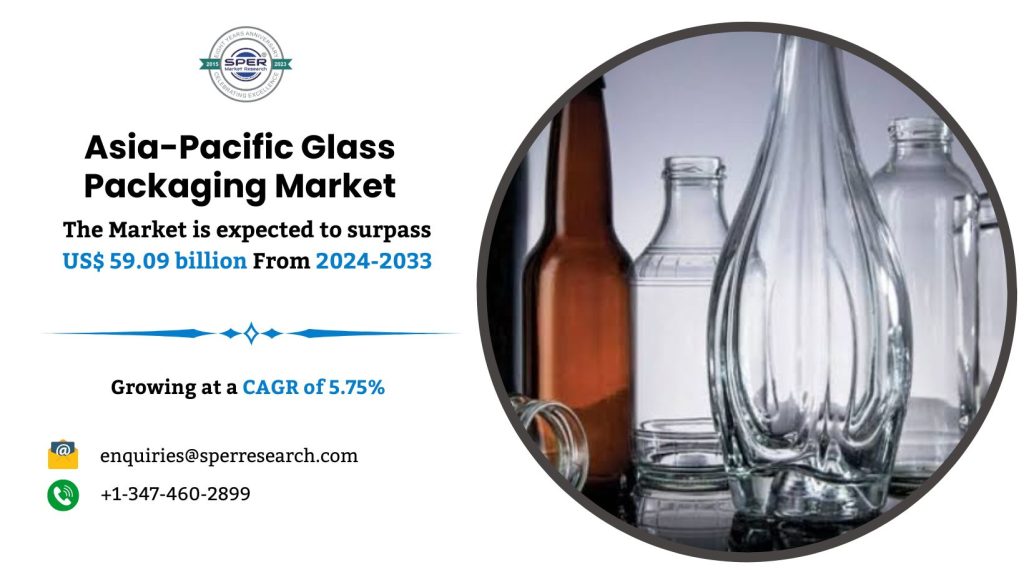
According to SPER Market Research,  Asia-Pacific Glass Packaging Market – By Product Type, By End User – Regional Outlook, Competitive Strategies and Segment Forecast to 2033′ states that the Asia-Pacific Glass Packaging Market is estimated to reach USD 59.09 billion by 2033 with a CAGR of 5.75 %

The Asia-Pacific glass packaging market is expanding rapidly, owing to rising consumer demand for sustainable and eco-friendly packaging, increased beverage consumption, and the growing popularity of premium cosmetic and pharmaceutical products.  Glass, which is 100% recyclable without loss of quality or purity, fits well with the region’s shift toward circular economy practices and environmental sustainability goals.   Countries like China, India, and Japan have seen an increase in alcoholic and non-alcoholic beverage consumption, particularly beer and ready-to-drink beverages, which continue to drive demand for glass bottles.  Furthermore, the expanding urban middle class and rising disposable incomes are driving up demand for aesthetically pleasing and high-quality packaging, particularly in the personal care and health product categories.

 Request a Free Sample Report: https://www.sperresearch.com/report-store/asia-pacific-glass-packaging-market.aspx?sample=1

While the Asia-Pacific glass packaging market is expanding, it faces a number of significant challenges that may limit its potential.  One of the most pressing issues is the high cost of manufacturing and transporting glass, which is heavy and fragile.   Glass containers are heavier than alternatives such as plastic and metal, resulting in higher fuel consumption and logistics costs, especially in a region as diverse as Asia-Pacific.  Furthermore, the lack of adequate recycling infrastructure in many developing countries throughout the region restricts the circular use of glass, reducing its environmental benefits.  This is compounded by a lack of public awareness and inconsistent waste segregation practices.  Furthermore, competition from less expensive and more flexible packaging materials, particularly plastics and emerging bioplastics, is a significant threat to market growth.  China dominates the Asia-Pacific glass packaging market, owing to its massive manufacturing base and high consumption of food and beverages. Some of its key players are- Amcor Ltd, Bemis Company Inc., Gerresheimer AG, Hindustan National Glass & Industries Ltd, MTS Medication Technologies (Omnicell Inc.

For More Information, refer to below link: –  

Asia-Pacific Glass Packaging Market Share

Related Reports:  

Japan Food Cling Film Market Growth, Size, Trends Analysis- By Material, By Product, By Thickness, By Sales Channel, By End User- Regional Outlook, Competitive Strategies and Segment Forecast to 2033

South Africa Plastic Packaging Market Size- By Product Type, By Type of Plastic- Regional Outlook, Competitive Strategies and Segment Forecast to 2033

Follow Us – 

LinkedIn | Instagram | Facebook | Twitter

Contact Us: 

Sara Lopes, Business Consultant — USA 

SPER Market Research 

enquiries@sperresearch.com 

+1–347–460–2899
Asia-Pacific Glass Packaging Market

Asia-Pacific Glass Packaging Market Growth and Size, Emerging Trends, Revenue, Key Players, Business Challenges, Opportunities and Forecast Till 2033: SPER Market Research

Glass packaging is becoming more and more popular as a durable and adaptable choice for keeping a range of products. This packing solution is made by melting silica, soda ash, limestone, and other basic ingredients at high temperatures to form a stiff, non-porous polymer. Glass packaging has several advantages, one of which is its impermeability, which prevents gases and oxygen from escaping while maintaining the contents’ quality and freshness. Additionally, because glass is inert and non-reactive, it does not react with packed goods, preserving the flavor and purity of the product.

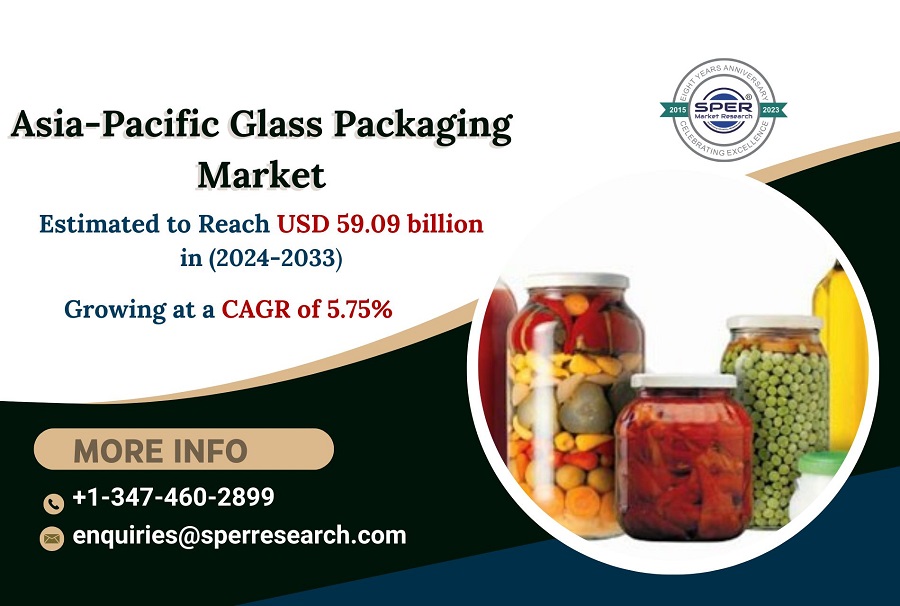
According to SPER market research, ‘Asia-Pacific Glass Packaging Market Size – By Product Type, By End User – Regional Outlook, Competitive Strategies and Segment Forecast to 2033’ state that the Asia-Pacific Glass Packaging Market is predicted to reach USD 59.09 billion by 2033 with a CAGR of 5.75%.

Drivers: The glass packaging industry is expanding across all categories due to the growing need for packaging that is safer and healthier. Packaging is more appealing to consumers when it is shaped, embossed, and given an artistic touch using cutting-edge techniques. Glass packaging is expanding as a result of consumer demand for environmentally friendly and biodegradable products as well as the expansion of the food and beverage industries.

The only industry driving the demand for glass packaging globally is the beverage sector, particularly the alcoholic beverage market. About half of the demand for glass containers worldwide is accounted for by the beer industry.

Challenges: The glass packaging market in Asia-Pacific is faced with multiple challenges that affect its growth potential and dynamics. First of all, it faces competition from materials like plastic, aluminium, and paperboard, all of which have unique benefits and put pressure on prices. In addition, the brittle nature of glass combined with transportation-related problems makes breakage during transit a worry, increasing costs and logistical complexity. Glass is naturally recyclable and environmentally benign, but there are still issues with streamlining the recycling process and lowering the carbon footprint that goes along with it. The demand for glass is impacted by shifting customer preferences toward sustainability and convenience, which also has an impact on packaging options. Complying with varying regulatory requirements in different markets presents extra challenges for producers.

Request For Free Sample Report @ https://www.sperresearch.com/report-store/asia-pacific-glass-packaging-market.aspx?sample=1

There has been an uneven response from the glass packaging sector to COVID-19. This epidemic has increased demand for a number of things. Packaging matters a lot more now days for grocery stores, healthcare facilities, and online commerce. Still, there’s less demand for business-to-business, luxury, and industrial transportation. The portfolio and exposure to the locations of different package manufacturers determine the impact.

Additionally, Some of the market key players are Amcor Ltd, Bemis Company Inc., Gerresheimer AG, Hindustan National Glass & Industries Ltd, MTS Medication Technologies (Omnicell Inc.), Piramal Glass Company, RPC Group.

For More Information, refer to below link:-

APAC Glass Packaging Market Outlook

Related Reports:

United Kingdom Plastic Packaging Market Size- By Packaging Type, By Product Type, By End User Industry- Regional Outlook, Competitive Strategies and Segment Forecast to 2033

Germany Glass Packaging Market Size- By Type, By End User- Regional Outlook, Competitive Strategies and Segment Forecast to 2033

Follow Us –  

LinkedIn | Instagram | Facebook | Twitter

Contact Us:  

Sara Lopes, Business Consultant – USA

SPER Market Research

enquiries@sperresearch.com

+1-347-460-2899